How to Choose Children’s Fish Oil: 10 Options Compared by DHA, Form & Age
Kang·Published ·Updated ·20 min read
This article compiles public online discussion, marketplace and review-site reviews, and official brand information, verified by our editors. Links go straight to brand or retailer pages; spaceA earns nothing from clicks or purchases. Prices and availability are subject to the retailer.
About the Editor
KangContent Editor
AI workflow developer by day; formerly an Instagram copywriter and marketing copy editor at a jewellery company. Asks AI before ordering anything, then opens five or six tabs to compare line by line, and reads real user reviews on Threads.
Introduction
Children take fish oil for DHA, a fatty acid that is a structural component of the brain and retina. The body produces very little of it, so it usually must be obtained from eating fish; children who eat fish fewer than twice a week can take one kids’ fish oil capsule daily to make up the FAO/WHO-recommended 100–250 mg of EPA plus DHA per day. This article compares 10 kids’ fish oils. School-age children who want to reach 250 mg DHA with one capsule a day can choose Yibixi (益比喜) Xiao Jingming; children over three who like to chew can choose Yunbuer (孕哺兒) Little Fish Balls; those who want to start from age two can choose Caroline Peipei (卡蘿琳佩佩) Kids’ Fish Oil.
Which ones can your child take?
A 6-year-old needs 200–250 mg of EPA + DHA a day (FAO/WHO recommendation). 8 of these 10 fit.
Capsules per day follow each brand’s label; monthly cost uses list price over 30 days. Check with a doctor if your child takes blood thinners.
Which children benefit from kids’ fish oil
Children who eat fish fewer than twice a week
Children who eat fish fewer than twice a week should take one kids’ fish oil capsule daily. At 165 mg DHA, you’d need about 142 g of tilapia fillet to get that amount, and most children don’t eat that much fish in one meal. The FAO/WHO recommendation is 100–250 mg EPA plus DHA per day for ages 2–10. The 10 kids’ fish oils compared here range from 66 to 275 mg DHA per capsule. If a child already eats fatty fish like salmon or mackerel two to three times a week, they may get enough from meals and don’t necessarily need supplements.
Children over three who can already chew
Children over three who can chew are best suited to the common chewable softgel kids’ fish oils. These capsules are made into small fish shapes and flavored with citrus or berries; you bite to break them and don’t need water to swallow. Children under three usually can’t chew well; brands recommend cutting the capsule open and squeezing the oil into milk or complementary foods, and an adult should watch to avoid choking.
Children who refuse fish-flavored products
Children who refuse anything that smells fishy should choose flavored products that have undergone deodorization. Fishy odor usually comes from oil oxidation, so besides flavoring, check the after-opening shelf life: some must be finished within one to two months, others can be kept for up to a year. There is also an enteric-coated capsule that only dissolves in the intestine, which reduces fishy burps; however, enteric capsules must be swallowed whole and are better for school-age children who can swallow pills.
10 recommended kids’ fish oils
The following prices and specifications are taken from each brand’s official website and were verified one by one on 2026-10-22; user reviews were compiled from public discussions on PTT and Dcard.
1
Yibixi Xiaojingming (小晶明) DHA Children’s Fish Oil
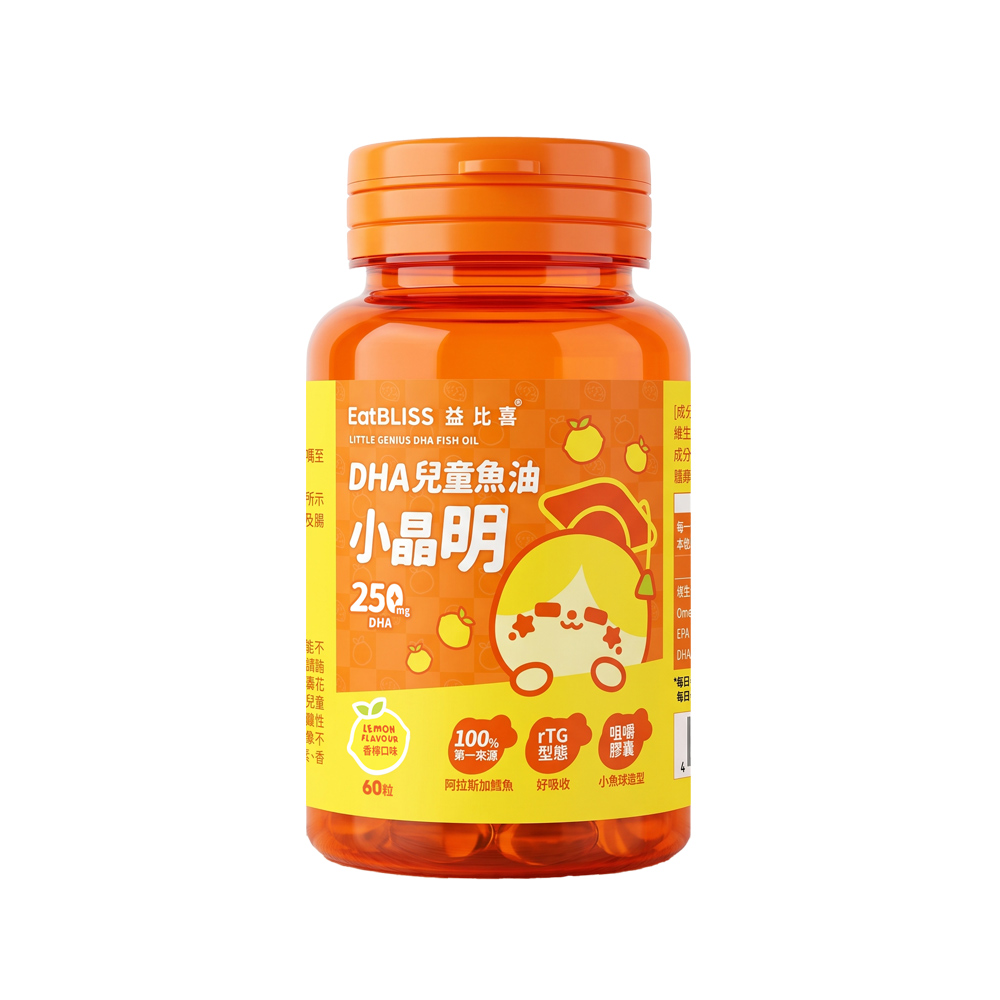
Editor’s takeEach Xiaojingming softgel contains 250 mg DHA and added vitamin D. School-age children take one capsule a day; with an additional 50 mg EPA this meets the FAO/WHO recommendation of 200–250 mg per day for ages 6 to 10. The fish oil is sourced only from Alaskan cod, and the capsules are small—if a child can’t swallow them yet you can cut them open and mix the oil into yogurt or rice.
Product positioning
Fish oil softgels for daily DHA supplementation in school-age children
Price
NT$1,480/60 capsules (also available 10-capsule pack NT$299)
Key ingredients
100% Alaskan cod fish oil (rTG type)
Dosage
Each capsule contains 250 mg DHA, DHA:EPA = 5:1; 1 capsule daily, do not exceed 2 capsules
Form
Small softgel, can be swallowed whole or cut open and added to food
Other ingredients
Vitamin D3; citrus oil and lemon oil for flavoring
Pack size
60 capsules / jar
Official information
No added artificial colors, preservatives, or artificial flavors
Tested for heavy metals and phthalates
Shelf life 3 years
Contains fish products; not suitable for those allergic to fish
Yoho Power Yoho Kids Children’s Fish Oil Chewable Softgels
Editor’s takeEach Yoho Kids contains 275 mg DHA; one capsule per day is enough for children aged 4 and up. The lemon-lime flavor can be bitten open or chewed until it melts in the mouth. The box is a Qiaohu collaboration, so kids will ask for it themselves and parents don’t need to chase them to take it.
Product positioning
Chewable DHA fish oil for children aged 4 and up
Price
NT$850/30 capsules
Key ingredients
Norwegian Epax® rTG fish oil
Dosage
Per capsule: DHA 275 mg, EPA 57.8 mg; 1 capsule daily for ages 4+, 2 capsules daily for ages 12+, do not exceed 2 capsules
Form
Chewable softgel (lemon-lime flavor)
Pack size
30 capsules/box
Origin
Made in New Zealand
Official information
Qiaohu collaboration packaging
Fish oil undergoes two-stage purification
Tested for heavy metals, radiation, and microbes
What users like
Fish shape is cute; kids really like it
Children like the lemon flavor
The capsule is very thin; kids are willing to eat it
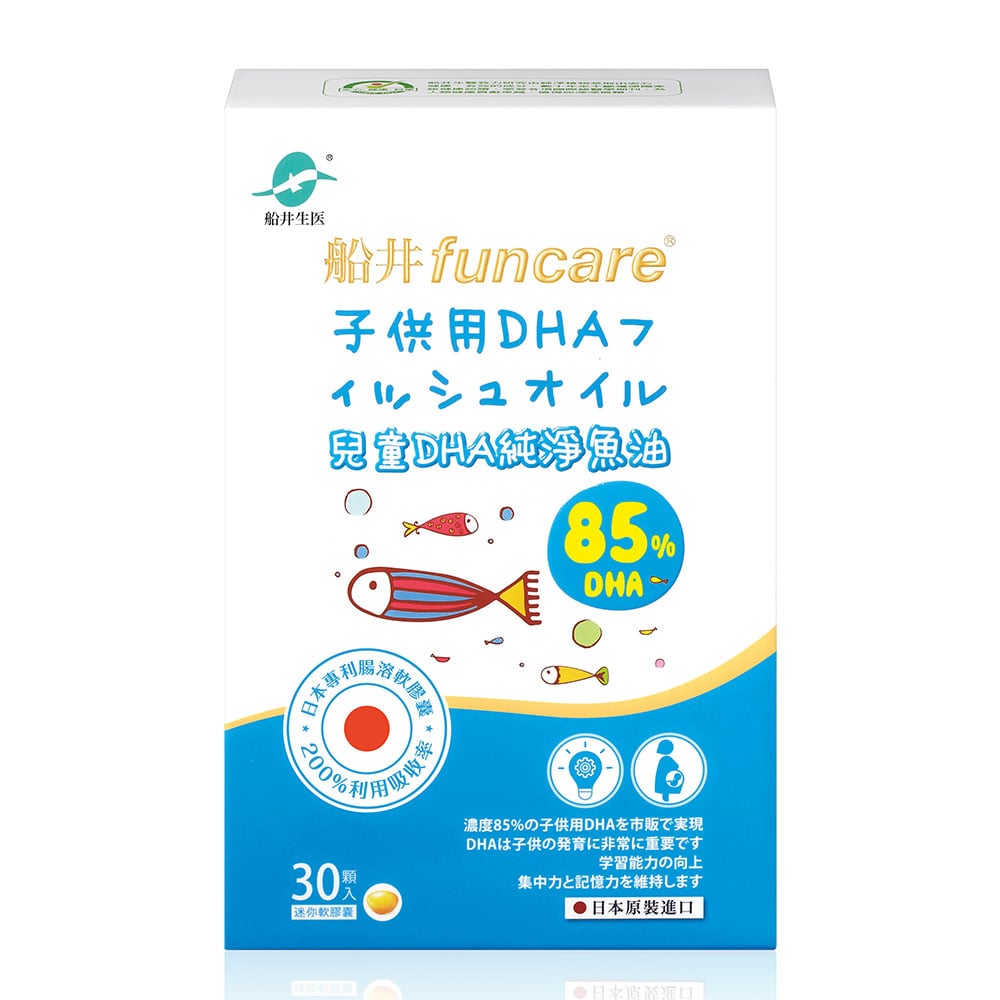
Editor’s takeFuncare uses enteric-coated softgel capsules that only dissolve in the intestine, so you’re less likely to get fishy burps; each capsule is only 1 cm with 213 mg of DHA. Enteric capsules must be swallowed whole, so they’re suitable for school-age kids who can already swallow pills; the capsule shell is porcine gelatin, so families with dietary restrictions should confirm first.
Product positioning
High-concentration DHA fish oil for school-age children aged 4–12
Price
NT$1,980/30 capsules
Key ingredients
rTG fish oil with 85% DHA concentration
Dosage
Each capsule contains at least 213 mg DHA; ages 4–12 take 1 capsule after a meal daily, 12+ and pregnant women take 2 capsules daily
Form
Enteric softgel (approx. 1 cm diameter, swallow whole)
Other ingredients
Vitamin E (antioxidant)
Pack size
30 capsules/box
Origin
Gifu Prefecture, Japan
Official information
IFOS five-star and GOED certifications
Public reports for heavy metals, dioxins, and plasticizers testing
Capsule shell made from porcine gelatin
Contains fish products; not suitable for those with fish allergies
What users like
The capsules are small enough; kids really like them
Da-Yan Biotech German DHA 80% Children’s Fish Oil (大研生醫 德國DHA 80%兒童魚油)
Editor’s takeDa-Yan’s fish oil reaches an 80% concentration: each small softgel contains 200 mg DHA, plus 200 IU vitamin D3. Take one capsule a day. It’s suitable for pregnant and breastfeeding mothers, so if your household has both a pregnant person and young children, you can buy the same product for everyone.
Product positioning
High-concentration DHA fish oil suitable for both children and pregnant/breastfeeding mothers
Price
NT$1,500/30 capsules
Key ingredients
Germany KD Pharma 80% high-concentration rTG fish oil
Dosage
200 mg DHA per capsule; 1 capsule daily
Form
Small softgels
Other ingredients
Vitamin D3 200 IU (DSM Quali®-D)
Pack size
30 capsules / box
Official information
Fish oil purified using the KD-Pür® process
Contains fish products; not suitable for those allergic to fish.
What users like
Small and easy to swallow, with little fishy smell
Even children just over 3 years old can swallow it
Yunbuer (孕哺兒) Pediatric Children’s Fish Oil DHA Chewable Little Fish Balls
Editor’s takePregnancy & Nursing made these chewable softgels in a little fish shape; each contains 165 mg DHA plus 100 IU vitamin D3. There are orange and lemon flavors to alternate between. They must be bitten and chewed rather than swallowed whole, so they are suitable only for children aged 3 and up; the formula contains soy, so avoid if your child is allergic to soy.
Product positioning
Chewable DHA fish oil for toddlers and children aged 3 and above
Price
NT$499/30 capsules
Key ingredients
Norwegian GC RIEBER 70% rTG fish oil (anchovy source)
Dosage
Per capsule: DHA 165 mg, EPA 10 mg; 1 capsule daily for ages 3+, do not exceed 2 capsules
Form
Fish-shaped chewable softgels (orange, lemon flavors), must be bitten and chewed
Other ingredients
Vitamin D3 100 IU, vitamin E, lecithin
Pack size
30 capsules / box
Official information
Consume under adult supervision to avoid choking
Contains fish and soy products
Consume within 3 months of opening
What users like
The orange flavor isn’t unpleasant, and the fish shape is quite cute
The fish appearance makes it easier for kids to accept
Editor’s takeBHK’s provides 142.5 mg of DHA and also adds phosphatidylserine (PS) and vitamins A, D, and E, so one capsule supplies a wider range of nutrients. For ages 3 and up, two capsules per day are recommended; a 60-count bottle lasts about one month. The formula contains fish, soy, and peanuts, so children with peanut allergies should not take it.
Product positioning
Children’s multi-ingredient fish oil with PS and vitamins
Price
NT$690/60 capsules
Key ingredients
U.S. rTG fish oil, patented phosphatidylserine (PS)
Dosage
Each capsule: DHA 142.5 mg, EPA 28.5 mg; ages 3+ take 2 capsules daily, under 3 take 1 capsule daily (cut open to use), do not exceed 2 capsules
Form
Small fish-shaped chewable softgels (orange flavor); please chew thoroughly
Other ingredients
Vitamin A 964 IU, Vitamin D 140 IU (from lanolin), Vitamin E
Pack size
60 capsules/bottle
Official information
Contains fish, soy, peanuts and their products
Capsule made from bovine hide, not suitable for vegetarians
If you take anticoagulant medications or have diabetes, consult your doctor first
What users like
The little fish shape is cute; kids really like it
If you bite it open it’s orange-flavored, so kids are more willing to eat it
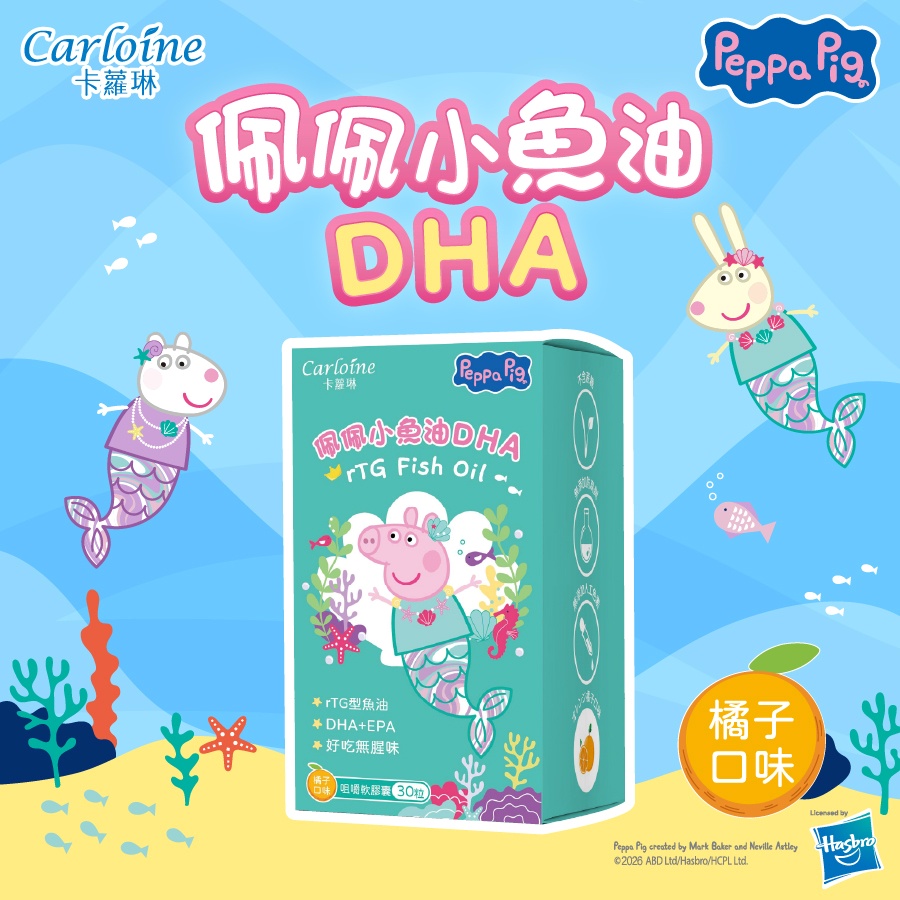
Editor’s takePeppa little fish oil uses Peppa Pig packaging. Each capsule contains 125 mg DHA; ages 2–4 take one per day, and those over 4 can take up to two. The same product can be used from kindergarten through early elementary school. No artificial colors, sucrose, or preservatives added. Orange-flavored capsules can be bitten and eaten directly.
Product positioning
Chewable DHA fish oil for children aged 2 to 12
Price
NT$900/30 capsules
Key ingredients
German patented rTG fish oil
Dosage
Each capsule contains 125 mg DHA; ages 2–4: 1 capsule daily; ages 4 and above: 1–2 capsules daily; do not exceed 2 capsules
Form
Fish-shaped chewable softgel (orange flavor); bite open and consume
Pack size
30 capsules/box
Origin
Taiwan
Official information
Peppa Pig co-branded packaging
No artificial colors, sucrose, or preservatives
Contains fish, soy, and their derivatives
Parents should assess swallowing ability for children under 4
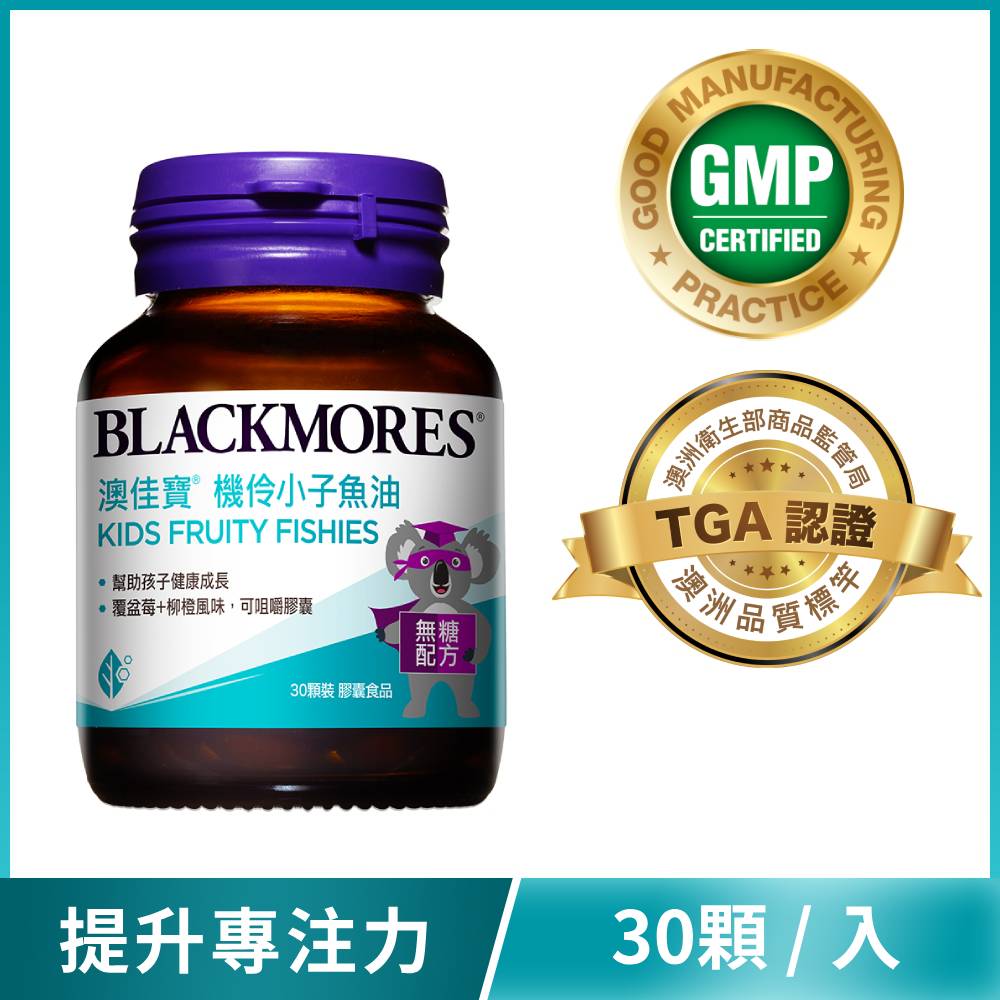
Editor’s takeEach Clever Kids capsule contains 300 mg of Omega-3, of which EPA is 180 mg and DHA is 120 mg. EPA is higher than DHA, so parents who want to prioritize DHA should take this into account. Raspberry–orange flavored, no added sugar. Children over 4 can chew directly; for those under 4, puncture the capsule and squeeze the oil into juice or milk.
Product positioning
Fruit-flavored fish oil for children aged 4 and above
Price
NT$749/30 capsules
Key ingredients
rTG concentrated fish oil
Dosage
Each capsule contains 300 mg Omega-3 (EPA 180 mg, DHA 120 mg); 1 capsule daily
Form
Softgel capsule; chewable or swallow whole
Other ingredients
Natural raspberry and orange fruit flavors; sugar-free
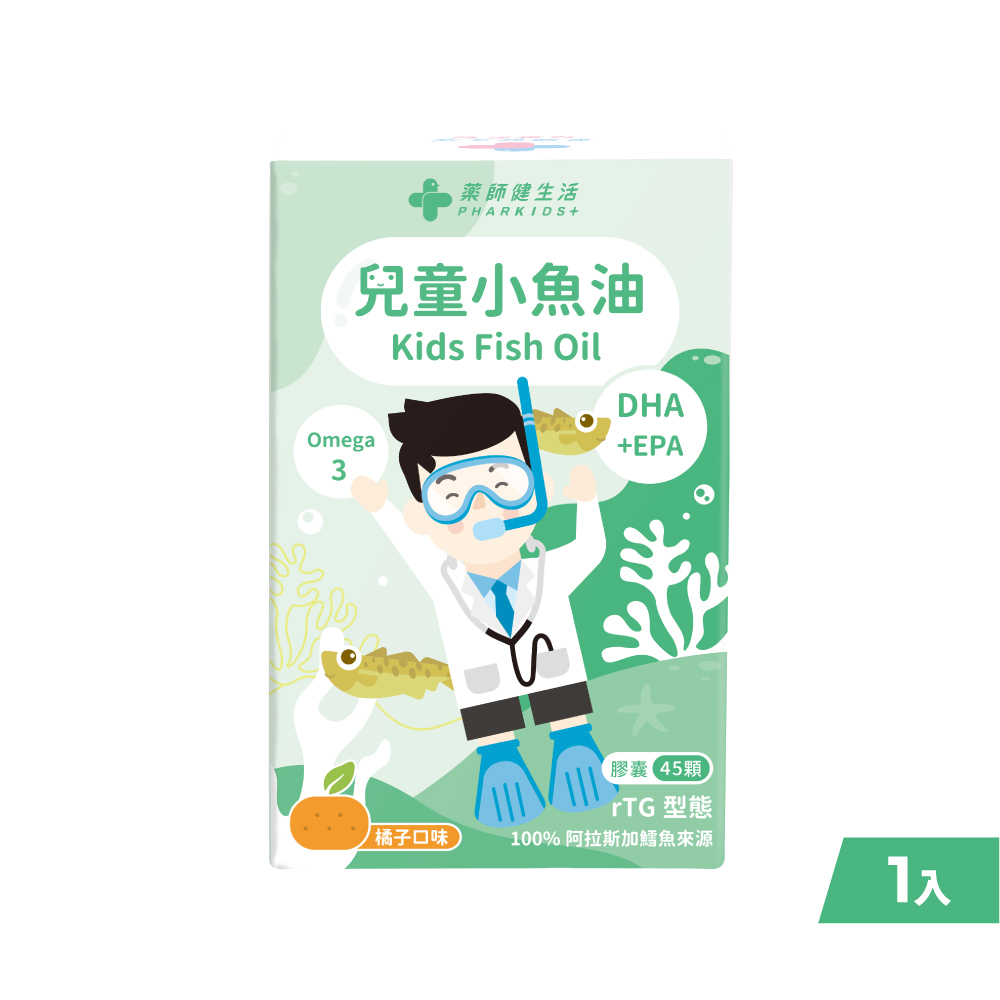
Editor’s takePharmacist Health Life’s kids fish oil was developed with pediatrician Cang Langu; DHA and EPA are in a 2:1 ratio, and the oil is rTG-type cod liver oil from Alaska. It can be started from age two. Each box contains 45 capsules, and every batch is tested for plasticizers, pharmaceuticals, and heavy metals.
Product positioning
Soft, chewy fish oil for children aged 2 and up
Price
NT$850/45 capsules
Key ingredients
Alaska cod rTG fish oil, DHA:EPA = 2:1
Dosage
510 mg per capsule (including capsule); 1–2 capsules daily, do not exceed 2; the website does not list mg of DHA per capsule
Form
Small fish-shaped soft, chewy softgel
Pack size
45 capsules/box
Origin
Taiwan
Official information
Each batch is sent to a third party to test for plasticizers, pharmaceuticals, and heavy metals
Capsules are bovine-derived gelatin
Contains fish products
If taking anticoagulants, consult your doctor first
Consume within 1 to 2 months after opening
What users like
Feeling safe buying because it’s endorsed by a pediatrician
The little fish shape is cute, and kids find it tasty
Xiaoer Risal (小兒利撒爾) Little Fish Chewable Softgels
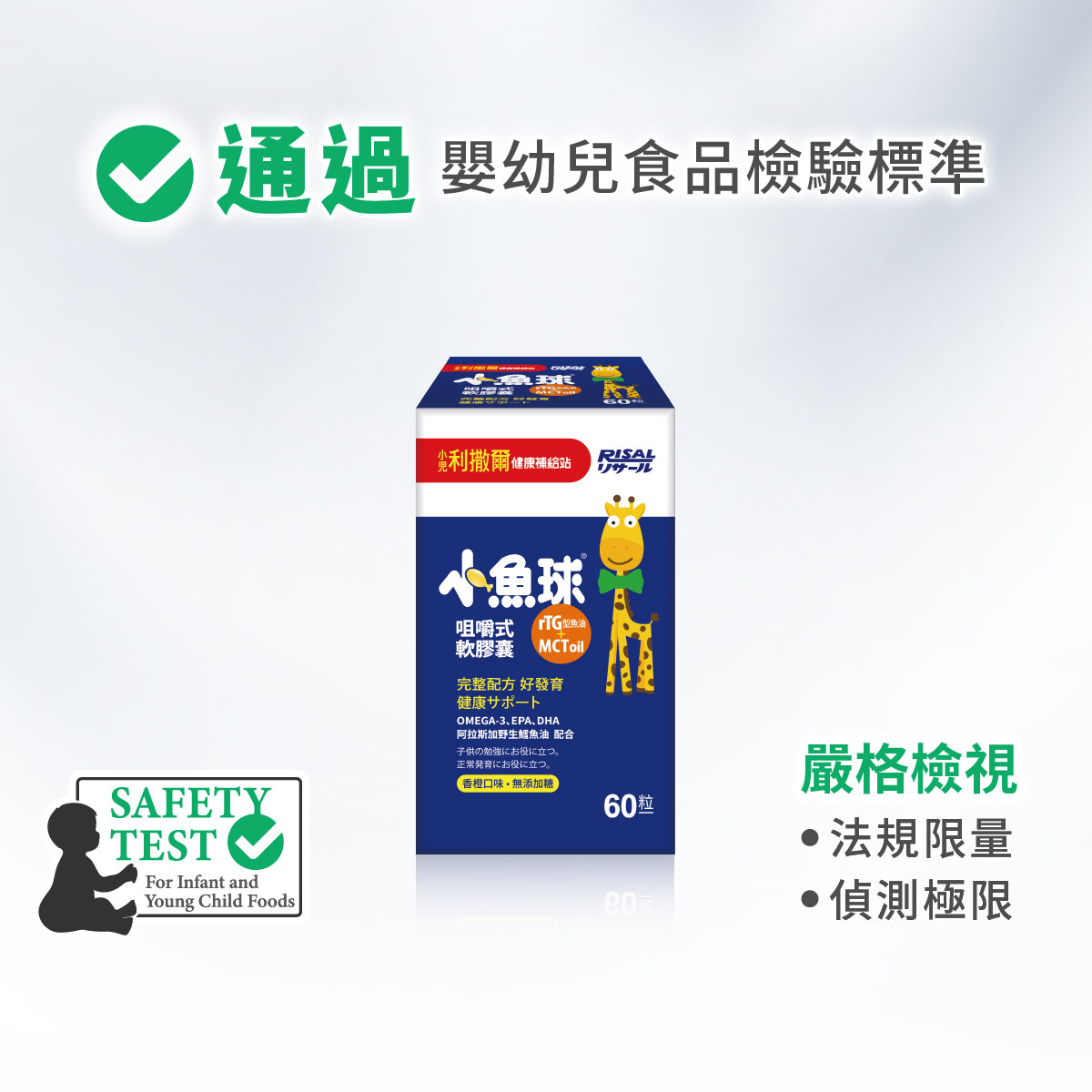
Editor’s takeThe Little Fish ball contains 400 mg concentrated cod liver oil per capsule, with 100 mg EPA and 66 mg DHA. The single-capsule content is small; for ages 1–6 give 1–2 capsules per day, which makes dosing easier for younger children. The cod liver oil comes from MSC-certified wild Alaska cod, and the capsule can also be squeezed out and spread on foods the child likes.
Product positioning
Chewable cod liver oil suitable for children aged 1 and up
Price
NT$700/60 capsules
Key ingredients
US rTG cod liver oil 400 mg, MCT oil
Dosage
Per capsule EPA 100 mg, DHA 66 mg; ages 1–6: 1–2 capsules daily; over 6 years: 2 capsules daily
Form
Fish-shaped chewable softgel (orange flavor)
Other ingredients
Soy lecithin, maltitol
Pack size
60 capsules / jar
Official information
Fish oil sourced from MSC-certified wild Alaska cod
No artificial colors
Contains fish and soy products
Consume within 12 months of opening
What users like
Soft and chewy, kids can eat without fear of choking
Fish shape and aroma make it easy for children to accept
Choosing Children’s Fish Oil: Look at DHA Amount, Form, and Dosage Form
Daily DHA Needs Vary by Age
FAO/WHO 2010 fatty acids recommendation suggests 100–150 mg of EPA plus DHA per day for ages 2–4, 150–200 mg for ages 4–6, 200–250 mg for ages 6–10, and from age 10 onward follow the adult recommendation of 250 mg. First determine the daily amount based on your child’s age, then check how much DHA is in one capsule to know whether one or two capsules per day are needed. Products with low per-capsule DHA often require two capsules a day, which halves the number of days one bottle lasts; when comparing prices use daily cost rather than just bottle price—the table at the start of the article can calculate this directly.
When All Are rTG, Check Concentration and Storage
rTG means the fish oil has been concentrated and then converted back to a re‑esterified triglyceride structure, the same form as oil in fish flesh, and is better absorbed than ethyl ester (EE) forms. All 10 products we compared are labeled rTG, so the difference lies in concentration and freshness: some have DHA concentrations over 80%, so the same‑sized capsule can contain much more DHA; oxidized fish oil becomes fishy, and some products must be consumed within one to two months after opening while others can last a year. Before buying a large bottle, calculate whether your child can finish it in time.
Formulation Should Match Whether Your Child Can Chew
Most children’s fish oils are chewable softgels that you bite open; these are most convenient for children over three who can chew. Enteric capsules must be swallowed whole and suit school‑age children who can swallow pills. For children under three, cut open the capsule and mix the oil into food. Also check the ingredient list before ordering—allergens and capsule sources are listed there: some products contain soy or peanuts, and capsule shells can be pork gelatin or bovine gelatin, so confirm if your family has allergies or dietary restrictions.
Ingredients, Common Mistakes, and Suitable Groups at a Glance
Active ingredients and amount comparison: The 10 children’s fish oils we reviewed contain between 66 mg and 275 mg of DHA per capsule, a fourfold difference. Capsules with over 200 mg DHA include Youhuo Yuanli (悠活原力) 275 mg, Yibixi (益比喜) 250 mg, Chun‑Wei Biotech (船井生醫) 213 mg, and Dayan Biotech (大研生醫) 200 mg—school‑age children can get enough with one capsule a day. Blackmores (澳佳寶) lists 300 mg Omega‑3 per capsule with more EPA than DHA, and Xiao’er Lisar (小兒利撒爾) has 66 mg DHA per capsule; these require taking the recommended number of capsules per day to meet suggested intakes.
Suitable groups: Xiao’er Lisar (小兒利撒爾) is labeled for ages 1+, Carolyn (卡蘿琳) and Pharmacist Healthy Life (藥師健生活) are labeled 2+, Yun Bu Er (孕哺兒) and BHK’s are labeled 3+, Youhuo Yuanli (悠活原力) and Blackmores are labeled 4+, and Chun‑Wei Biotech (船井生醫) targets ages 4–12. Younger children should use chewable products; if they cannot chew yet, cut open the capsule and mix the oil into food.
Common mistakes: Thinking that more is always better. Most products state not to exceed two capsules per day, and the Ministry of Health and Welfare also limits daily fish oil intake to EPA plus DHA not exceeding 2 grams. Another often overlooked item is allergens—some products contain soy or peanuts; children taking anticoagulant medications should consult a physician before taking children’s DHA supplements.
FAQ
▶What is the recommended fish oil dosage for children?
The FAO/WHO 2010 recommendation is 100–150 mg EPA plus DHA per day for ages 2–4, 150–200 mg for ages 4–6, 200–250 mg for ages 6–10, and from age 10 follow the adult recommendation of 250 mg. Follow the daily recommended dose on the package; the children’s fish oils compared here all state not to take more than two capsules per day.
▶What is the difference between fish oil, algal oil, and flaxseed oil, and which is best for kids?
Fish oil contains both EPA and DHA; algal oil is DHA extracted from algae and is suitable for vegetarians or families allergic to fish; flaxseed oil contains only ALA, which the body must convert to DHA and does so at a very low rate, so it is limited for DHA supplementation. If the child is not vegetarian and not allergic to fish, children’s fish oil is the most direct option.
▶At what age can children start taking fish oil?
Among the 10 products compared here, the youngest starts from age 1 (Risal’s product), while most label for age 3 or 4 and up because chewing softgels safely requires the ability to bite. For children under 3, manufacturers suggest cutting open the capsule and squeezing the oil into milk or baby food, supervised by an adult; for babies under 1, consult a pediatrician first.
▶Will fish oil taste fishy or cause children to refuse it?
Fishy smell mainly comes from oxidized oil. Children’s fish oils often add citrus, lemon, or berry flavors and are made as chewable softgels, so when bitten they taste fruity. After opening, store in a cool place or fridge and finish within the period stated on the package to reduce off-flavors. If a child still refuses, you can cut open the capsule and mix the oil into yogurt or rice.
▶Are there side effects from long-term fish oil supplementation in children?
At recommended doses, most children have no issues; occasional side effects include fishy burps, gastrointestinal discomfort, or diarrhea. The Ministry of Health and Welfare limits daily intake of EPA plus DHA to no more than 2 g; children’s fish oil capsules usually contain less than 300 mg each, so following the label is far from the limit. Children taking anticoagulant medication or who have bleeding disorders should consult a doctor before taking fish oil; some products add vitamins A and D, so avoid overlapping with other vitamin supplements.
Conclusion
All 10 children’s fish oils here are rTG-type fish oil; the real differences are per-capsule DHA content, age suitability, and dosage form. First calculate how much your child needs per day based on age, then choose a product that provides that amount and that your child can actually take. Before ordering, read the ingredient list carefully—if it contains soy, peanuts, or uses pork or beef gelatin for the capsule, it will be listed; unopened and opened shelf lives also vary, with some as short as one to two months. If a child can swallow pills or is worried about fishy burps, consider FunaiCare (船井生醫)’s enteric-coated fish oil; if a child won’t take capsules and you prefer to cut and mix the oil into yogurt or food, consider EatBliss Yibixi Xiao Jingming (益比喜小晶明); if the child is not yet two and you want to start with a small dose, consider Risal’s Little Fish Balls (小兒利撒爾小魚球).
 spaceA