 spaceA
Introduction
When converted per 1,000 mg, commercial collagen powders range from NT$3.3 to NT$22.6 — nearly a sevenfold difference. The price gap isn’t in the collagen itself but in the formula: a single-ingredient porcine collagen sachet with 5,000 mg costs under NT$17, while sachets that include NMN or elastin cost NT$40–60. Decide whether you want a multi-ingredient formula before comparing prices. This article compares 10 collagen powders sold on Taiwanese official websites, from Meiji and DHC to Sanduo; we put each sachet’s milligrams, official price, unit price, molecular weight, and animal source into the same table. If you prefer ready-to-drink packs and don’t want to mix powder yourself, see our other article collagen drink comparison.
Who should switch to collagen powder
People who already drink collagen drinks but want to save money
For the same daily 5,000 mg, ready-to-drink packs in our previous calculation cost NT$10–25 per 1,000 mg, while six of these ten powders are under NT$8 per 1,000 mg; Sanduo can be as low as NT$3.3. Over a month, ready-to-drink packs usually cost around NT$3,000, whereas switching to Meiji or DHC powder costs NT$750–990 per month, saving enough in a year to buy several jars. The trade-offs are having to find a cup and water yourself and accepting the powder’s taste.
Those who don’t mind mixing and want higher doses
Powder doses are adjustable: BHK’s official recommendation is two sachets (6,000 mg) per day; Weider recommends two sachets daily for the first three months; Sanduo and DHC’s one scoop contains 5,000 mg and can be increased as needed. Most studies look at continuous 8–12 week periods with daily intakes of 2,500–5,000 mg or more. Powder makes it easier to follow targeted dosages than fixed single-serve drinks.
People watching sugar intake or who dislike flavorings
Ready-to-drink packs often contain sugar and flavorings to taste better; single-ingredient powder variants have none: Sanduo, Fong Jie, NIPPI, and BHK’s list only collagen on their ingredient labels; one sachet has 0 g carbohydrates and sugars, so you can mix it into unsweetened soy milk or black coffee. Note that Weider contains lactose and sweeteners, and Meiji and Milcolla contain milk ingredients, so check if you have dairy sensitivities.
Brand recommendations
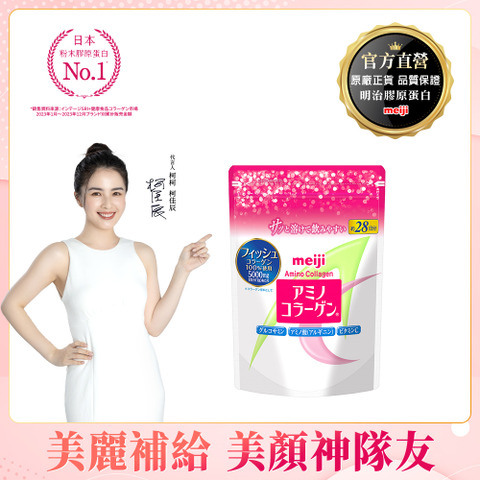
Meiji Collagen Powder Standard 196g
- Product positioning
- A common fish collagen powder sold in Japanese drugstores, emphasizing mild flavor and easy dissolution, paired with vitamin C and L-arginine for daily supplementation.
- Official price
- NT$749/196g (original price NT$988, about 28 days)
- Daily collagen
- 5,000mg (7g, includes spoon 1.5 scoops)
- Molecular weight
- The official site only states “low molecular weight” and does not provide a numerical value
- Source animal
- Fish
- Other ingredients
- Vitamin C, L-arginine, glucosamine hydrochloride
- Allergens
- Contains milk, fish, soy and their products
- Cost per 1,000 mg
- About NT$5.4
- Official information
- Uses Magical Clear mild-flavor technology to reduce fishiness; the official site states it can be added to cold, hot, savory or sweet drinks.
- The official site claims fish collagen is absorbed about 1.5 times better in the human body than pork-skin collagen.
- Quality testing did not detect estrogen, Staphylococcus aureus, or Salmonella.
- Made in Japan; shelf life 720 days.
What users like
- High brand recognition and trusted Japanese image
- Powder dissolves easily and mixes into both cold and hot drinks
- Convenient packaging (zipper bag / small packs)
What users complain about
- Many report a fishy smell or noticeable taste
- Some users report no noticeable effects after use
- Concerns that molecular weight, test items, and source information are not fully disclosed
- Some users find the price relatively high
- The official site has consumption warnings for pregnant women and people with chronic illnesses
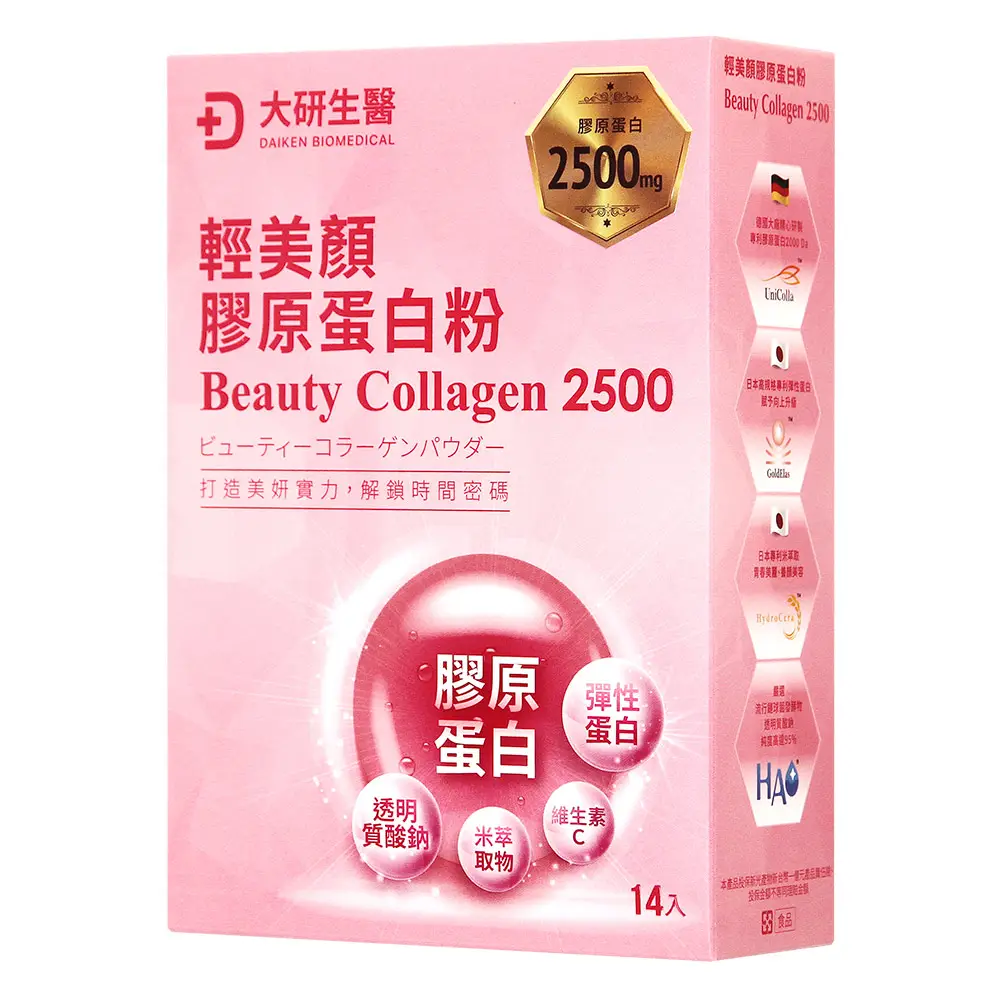
Daiken Biotech Light Beauty Collagen Powder
- Product positioning
- Daiken’s entry-level powder sachet: 2,500 mg collagen paired with five beauty complexes, promoted as berry-flavored with no fishy aftertaste.
- Official price
- NT$790/14 sachets (suggested retail price NT$1,185)
- Collagen per pack
- 2,500mg
- Molecular weight
- Average 2,000 Da
- Source animal
- Pig (website comparison table lists porcine collagen)
- Other ingredients
- GoldElas elastin, hyaluronic acid, brown rice ceramides, vitamin C, vitamin E, zinc
- Flavor
- Berry; website states no added sweeteners
- Per 1,000 mg cost
- About NT$22.6
- Official information
- The website states the collagen is sourced from a century-old German manufacturer with 2,000 Da collagen, and over 90% is small-peptide fractions.
- First-time buyers have a 30-day money-back guarantee if ineffective, per the website terms.
- Website Q&A: Pregnant women can generally consume it, but consultation with a physician is still recommended before use.
What users like
- Multiple users report improvements in nail and hair growth and a brighter complexion after a few weeks
- Some users find the flavor fruity and not fishy
- The formula is relatively simple, easy to incorporate into daily care routines
What users complain about
- Taste opinions vary; some users report a noticeable fishy smell
- Some users consider the price relatively high
- Some users are concerned about molecular weight and insufficient ingredient transparency
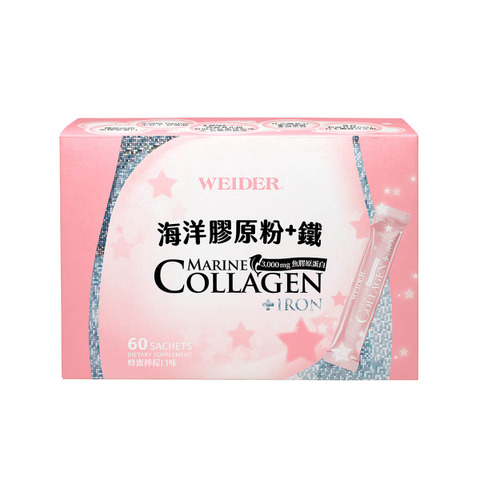
Weider Marine Collagen Powder + Iron 60 packets
- Product positioning
- Collagen powder blend with added iron, honey-lemon flavor; the official site recommends two packets daily for the first three months.
- Official price
- NT$1,415/60 packets (4.5g×60)
- Collagen per pack
- 3,000 mg (also contains iron 6 mg)
- Molecular weight
- 2,000 Da
- Source
- Fish skin (ASC-certified farmed)
- Other ingredients
- LIPOFER microencapsulated iron, camu camu extract (vitamin C), folic acid, glutathione, N-acetyl-D-glucosamine
- Allergens & contraindications
- Contains lactose and glucosamine derived from crustaceans; the official site advises pregnant or breastfeeding women, infants, and those allergic to glutathione to avoid.
- Per 1,000 mg cost
- Approximately NT$7.9
- Official information
- Collagen source is specified as fish skin from ASC internationally certified farmed sources, not discarded fish scales.
- The site states that two packets daily approaches the recommended iron intake by the Health Promotion Administration; initial use is suggested for three consecutive months.
- Not suitable for vegetarians: contains fish collagen, lactose, and ingredients derived from crustaceans.
What users like
- Powder dissolves well and is easy to mix
- Most people find the taste acceptable and easy to drink
- Each packet contains 3,000 mg collagen and claims small molecular size
- Contains vitamin C and encapsulated iron, allowing simultaneous iron and collagen supplementation
- Individual sachets are convenient to carry, and the price is relatively affordable
What users complain about
- The iron formula can bring out a distinctive taste that sensitive palates may dislike
- Collagen dose is moderate; not suitable for those seeking very high doses
- The collagen raw material does not list a patented brand
- Men or those without iron deficiency should monitor their iron intake if taking long term
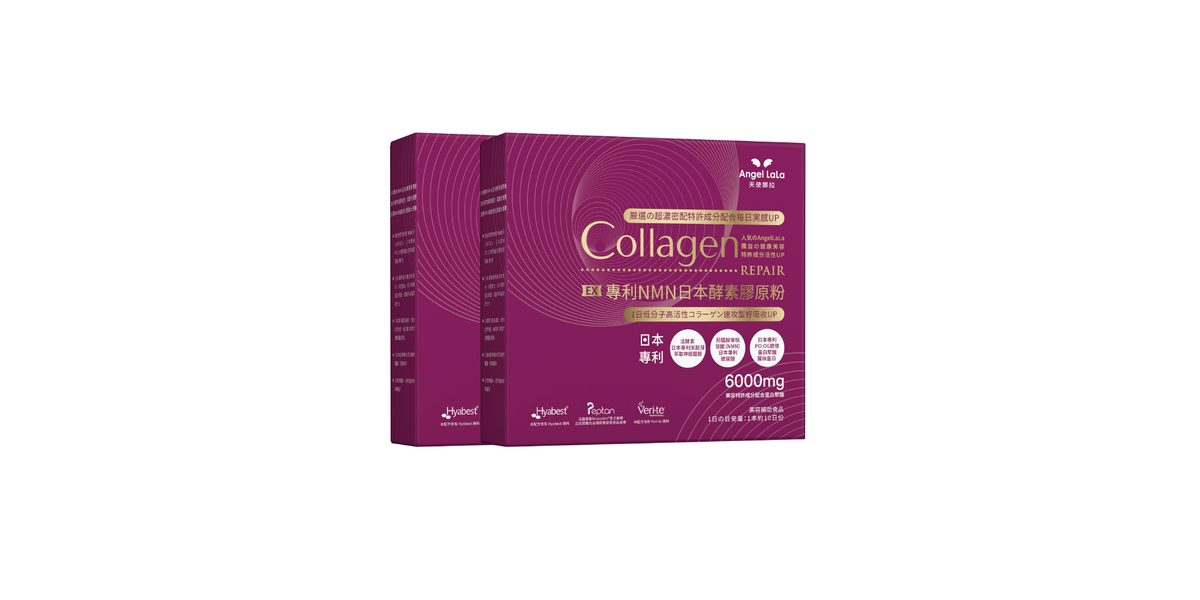
Angellala EX Patented NMN Japanese Enzyme Collagen Powder
- Product positioning
- A compound collagen powder marketed for nighttime care; in addition to collagen it contains NMN, resveratrol, and Q10. The official site calls it “Sleeping Beauty.”
- Official price
- NT$790/10 sachets (official site promotion: buy one get one free, two boxes NT$790)
- Collagen per pack
- 6,000 mg (stated on official site)
- Molecular weight
- 2,000 Da (PO.OG collagen stated on official site)
- Animal source
- Fish and bovine (official Q&A advises those allergic to fish or bovine sources to consult first)
- Other ingredients
- Natural yeast NMN, resveratrol, coenzyme Q10, 6D proteoglycan, hyaluronic acid
- Per 1,000 mg cost
- About NT$13.2 (about NT$6.6 during buy-one-get-one)
- Official information
- The official Q&A states common daily collagen supplement amounts are 2,500–5,000 mg; pregnant women should consult a physician before supplementing.
- Packaging lists collagen raw material as Peptan, hyaluronic acid as Hyabest, and resveratrol as Veri-te.
- Endorsed by Lai Ya-yan; the official site emphasizes use of legally approved natural yeast NMN from Taiwan.
What users like
- Flavor is generally praised; no fishy taste
- Individual sachets are convenient to carry; powder can be taken directly or mixed with liquid
- The 6,000 mg collagen per sachet is frequently mentioned
- Use of dual collagen sources (such as Peptan and PO.OG) is a common talking point
- Contains hyaluronic acid and other compound ingredients; some users report improved hydration and elasticity
What users complain about
- Some users feel the effects are unclear or report inconsistent results
- There are opinions that some ingredients do not list precise added amounts
- Contains milk powder ingredients that may not suit those with lactose intolerance or milk allergies
- Some consumers report poor cost performance
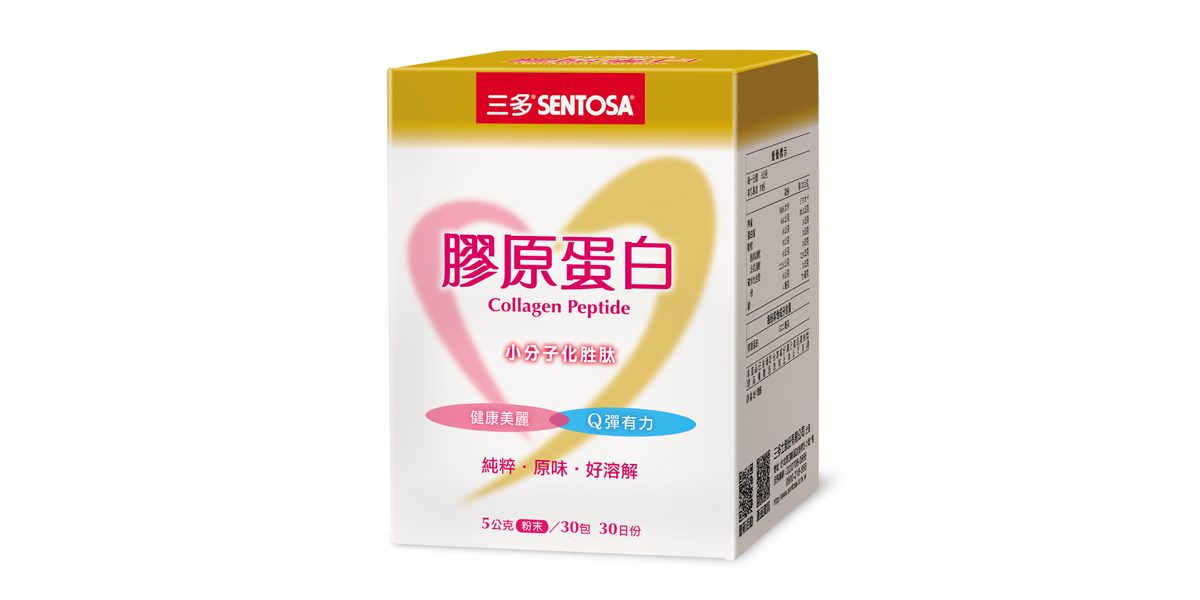
Sentosa Collagen (5g×30 packs)
- Product positioning
- A common single-ingredient pork collagen powder found in pharmacies; no compound formula, and the lowest price among the ten.
- Official price
- NT$495/30 packs (member price NT$446)
- Collagen per pack
- 5,000mg (5g per pack, one pack per day)
- Molecular weight
- The website only states “low-molecular-weight peptides,” without a numeric value
- Animal source
- Pork skin (Germany GELITA enzymatic hydrolysis)
- Other ingredients
- None, single-ingredient
- Per 1,000mg cost
- About NT$3.3
- Official information
- The website states it selects collagen from Germany’s century-old manufacturer GELITA; pork skin is extracted via enzymatic hydrolysis.
- Packaging indicates 5 g powder, 30 packs, 30-day supply, and promotes purity, original flavor, and good solubility.
- Sando was founded in 1978 and is one of Taiwan’s earliest companies to invest in patient nutrition product development.
What users like
- Affordable price; considered high value for money by most users
- Simple formula, convenient to combine with other nutrients
- Available in small packs and large jars
- Multiple users reported plumper, more elastic facial skin
- Some users reported smoother skin and improvements in pores or fine lines
What users complain about
- Has a noticeable fishy/pork or odd smell, needs a beverage to mask it
- Single-ingredient formula without added vitamin C or other absorption aids
- Animal source is pork, unsuitable for some groups
- Some users questioned the transparency of testing and labeling
- Effects vary by person; not everyone notices a difference
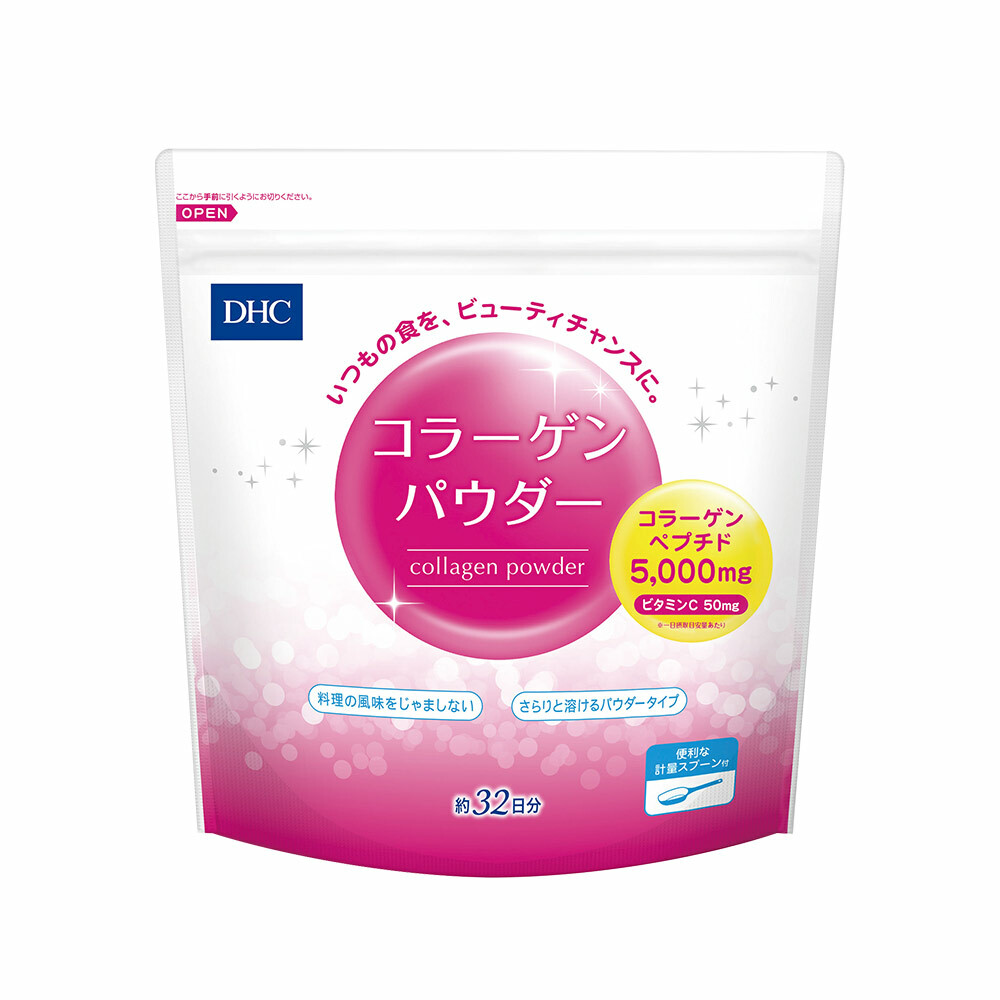
DHC Collagen Powder 192g
- Product positioning
- Japan-made hydrolyzed collagen powder sourced from pork, includes a measuring scoop for one scoop per day.
- Official price
- NT$990/192g (about 32 days)
- Daily collagen
- 5,000mg (6g per scoop, about 23 kcal)
- Molecular weight
- The official site only states “peptide-grade low molecular weight” without numeric value
- Source animal
- Pig
- Other ingredients
- Vitamin C 50mg
- Per 1,000 mg cost
- About NT$6.2
- Official information
- The official Q&A states the raw material is pork-based and not suitable for vegetarians.
- Consult a physician if you have chronic diseases, are on medication, pregnant, or breastfeeding.
- Can be added to hot or cold drinks or used in cooking; the site recommends scooping 6g with the provided scoop and mixing well.
What users like
- Most users find it odorless and easy to take
- The powder dissolves easily in hot or cold drinks
- Contains vitamin C, which is often mentioned as a plus
- Users frequently report firmer, plumper skin with a smoother feel
What users complain about
- Results vary by person and require continuous use to notice differences
- Some people find changes insignificant or slow
- Long-term consistent supplementation is needed to maintain effects
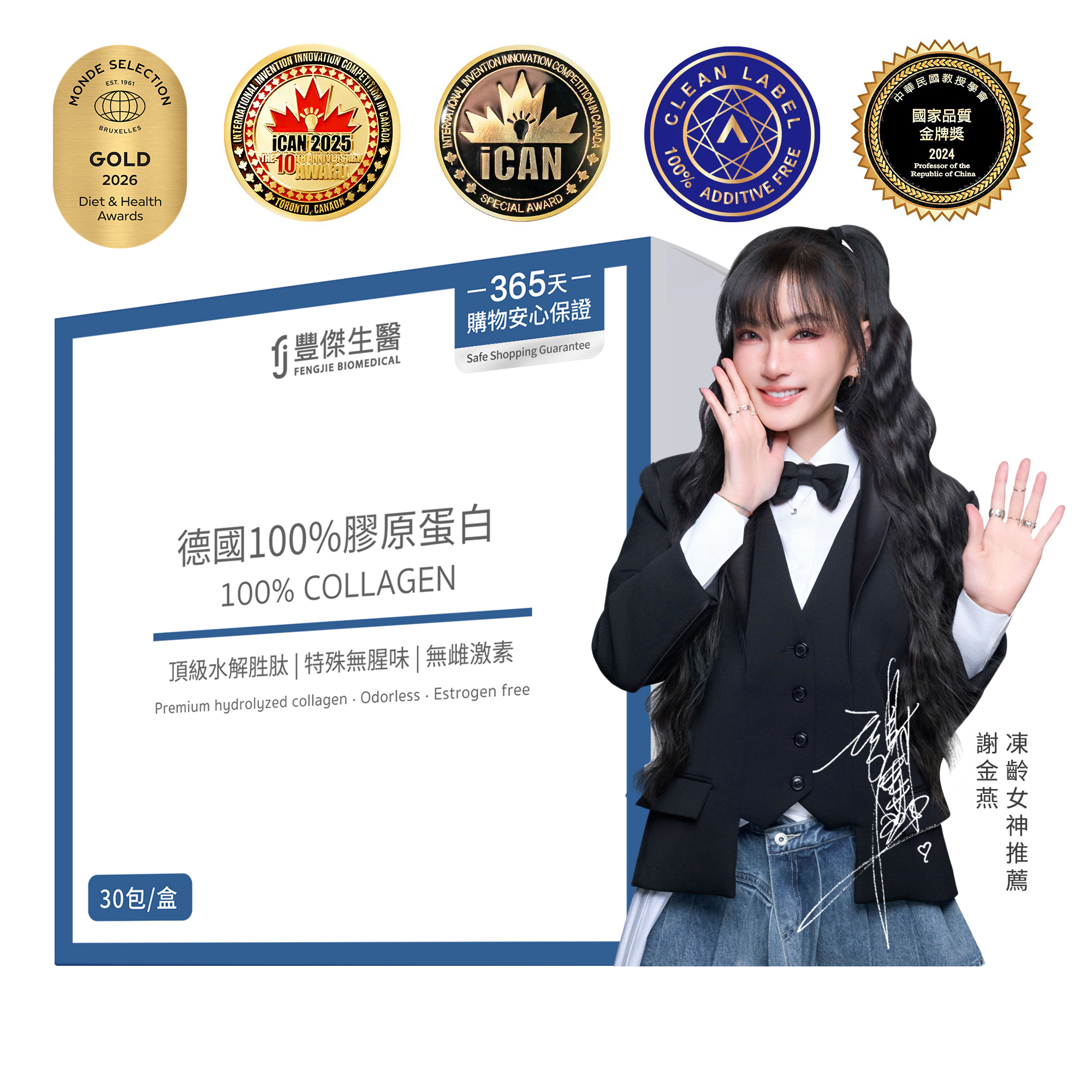
Fengjie Biotech German 100% Collagen (30 sachets)
- Product positioning
- Single-ingredient bovine collagen peptides, emphasizes no additives, heat-resistant, passed 400 pharmaceutical tests.
- Official price
- NT$720/30 sachets (original price NT$865)
- Collagen per pack
- 3,000mg
- Molecular weight
- 3,000 Da
- Animal source
- Cattle (GELITA, Germany)
- Other ingredients
- None, single-ingredient
- Note
- The official site states it is not recommended for those under 19
- Per 1,000 mg cost
- About NT$8
- Official information
- The official site lists the full ingredient as only collagen powder (bovine); 1–2 sachets daily, can be mixed into drinks or food.
- The official site lists passing 400 pharmaceutical tests (including 17 hormone items not detected) and low phosphorus and potassium testing.
- The official site recommends spacing it 30 minutes apart from other supplements and not to take it with carbonated drinks.
What users like
- Peptide-level small molecules (about 3,000 Da) are considered well absorbed
- Simple ingredients, single-ingredient 100% no additives
- Fine powder, dissolves easily in water and has no obvious fishy smell
- Can be mixed into coffee, yogurt and other hot/cold drinks
What users complain about
- Limited distribution channels, brand visibility is relatively low
- Some discussions note discrepancies in labeling or statements about origin (pork/cattle)
- A few users mentioned price or packaging specifications could be improved
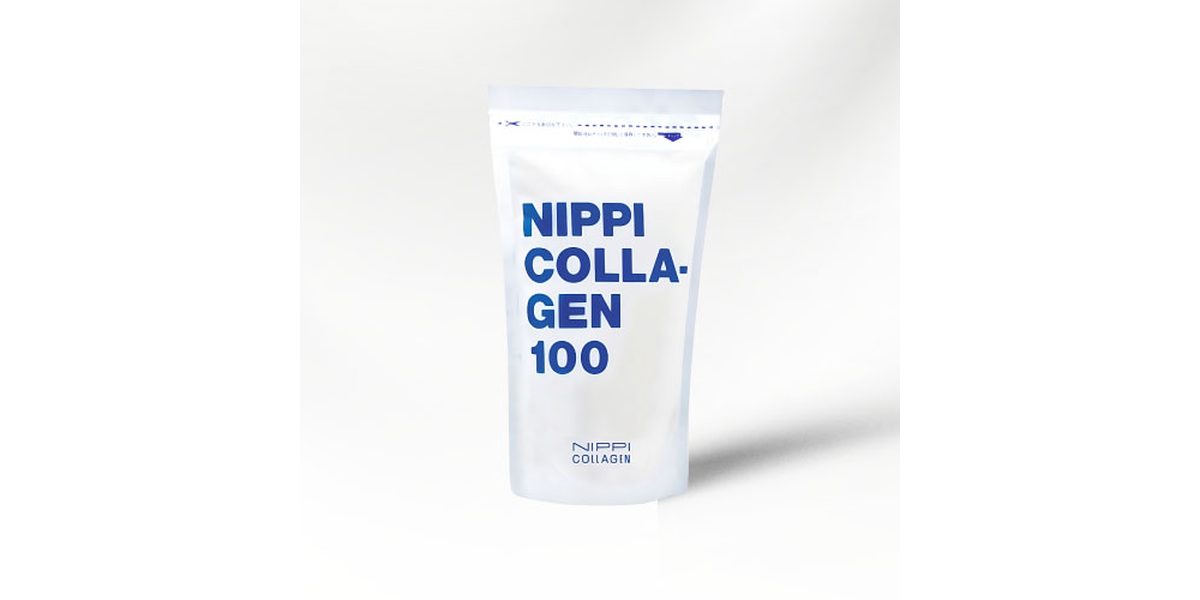
NIPPI 100% Pure Collagen Peptides 110g
- Product positioning
- Single-ingredient pure collagen peptides from Japan’s NIPPI, colorless and tasteless, can be added to any beverage.
- Official price
- NT$1,190/110g (original price NT$1,488; also available as 5g×30 sachets NT$1,800)
- Daily collagen
- Not stated on official site (includes a 5g scoop; official site converts this to less than NT$43 per day)
- Molecular weight
- Not stated on official site
- Source animal
- Not stated on official site
- Other ingredients
- None; official site states no sweeteners, flavorings, or colorants
- Per 1,000mg (cost)
- About NT$10.8 (calculated as 100% collagen)
- Official information
- The official site states 100% pure collagen peptides, containing no estrogenic additives.
- Imported from Japan; in Taiwan distributed exclusively by Han Cheng Digital Technology.
- NIPPI was founded in 1907; the official site claims multiple Monde Selection food quality awards.
What users like
- Users believe the raw material comes from Japan NIPPI (fish scale/fish skin collagen)
- Simple ingredient list; hydrolyzed low-molecular peptides are easily absorbed
- Continued users report steady improvement in skin condition
- Powder packaging is convenient for daily supplementation
What users complain about
- Opinions on taste vary; some find a slight fishy smell
- Formula is simple; users suggest supplementing vitamin C and other nutrients
- A few users feel the price is relatively high
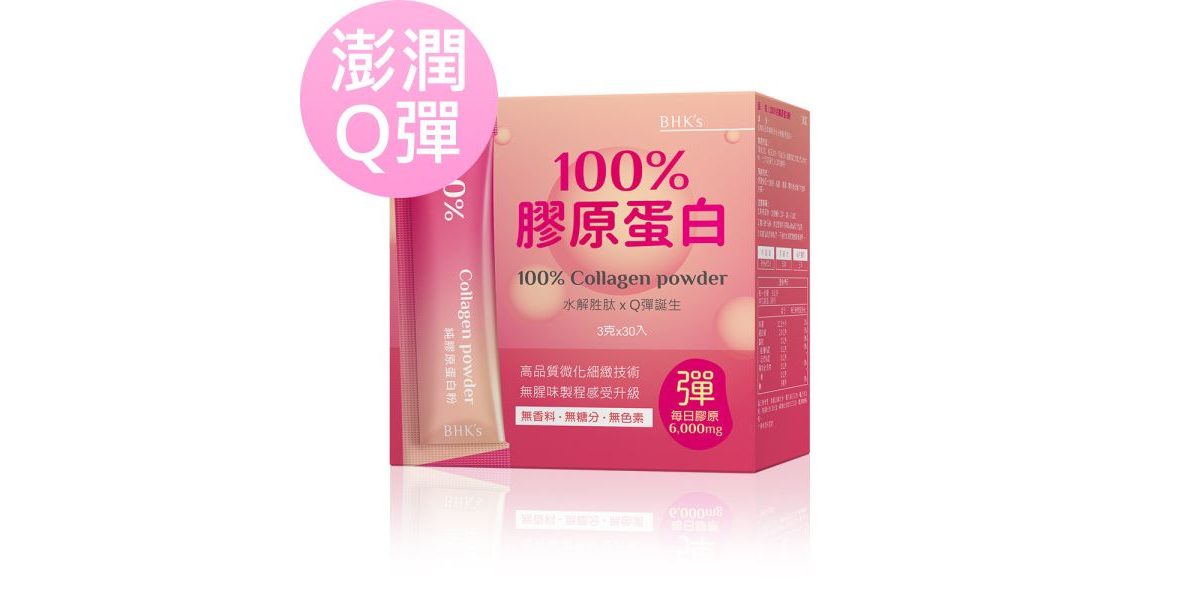
BHK’s 100% Collagen Powder (3g × 30 packets)
- Product positioning
- A Taiwanese single-ingredient fish collagen powder; the official site lists all ingredients transparently and states it’s safe during pregnancy and breastfeeding.
- Official price
- NT$690/30 packets (original price NT$1,090)
- Collagen per pack
- 3,000 mg (3 g per packet, protein 2.9 g; website recommends two packets per day)
- Molecular weight
- Less than 3,000 Da
- Animal source
- Fish (Japan-patented low-molecular fish collagen)
- Other ingredients
- None, single-ingredient
- Allergens
- Contains fish products; not vegetarian
- Cost per 1,000 mg
- About NT$7.7
- Official information
- Nutrition label on official site: per packet 3 g, protein 2.9 g, fat and sugar 0 g, sodium 3 mg.
- Official Q&A states it’s suitable for pregnant and breastfeeding mothers; do not take if allergic to fish.
- Recommended to pour slowly into the mouth; can also be added to drinks or food.
What users like
- Not fishy; good flavor acceptance
- Users report improved skin hydration and elasticity
- Helps with skincare absorption; many users take it consistently long-term
What users complain about
- Takes time to see results; requires long-term use
- Limited improvement for more severe or noticeable sagging
- A few users expected faster or more noticeable changes
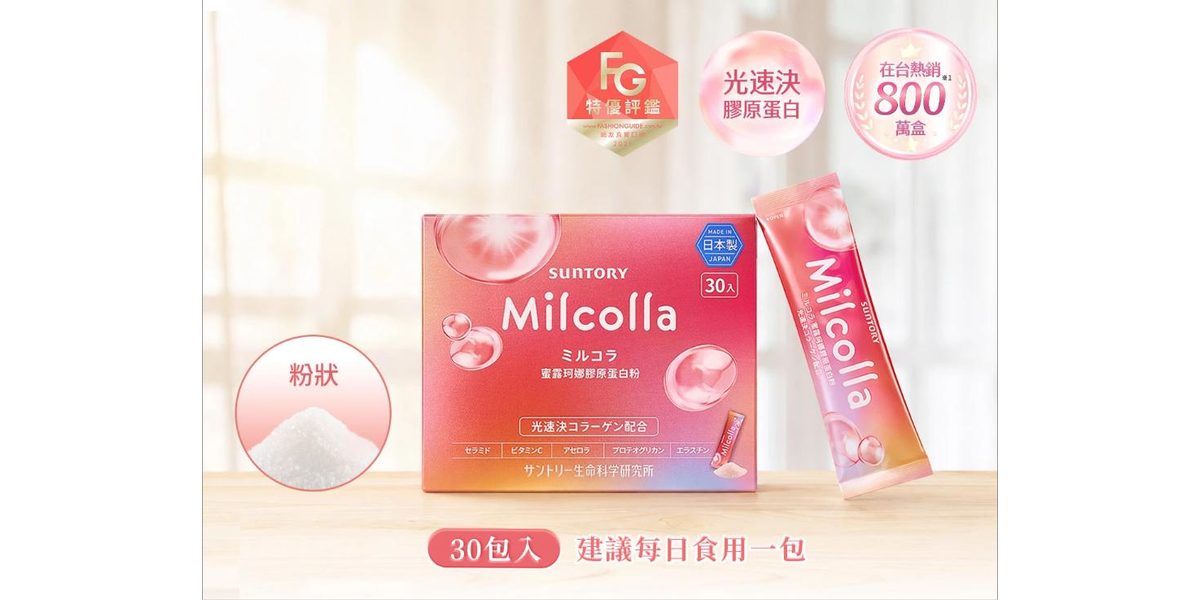
Suntory Milcolla (30-day supply)
- Product positioning
- Suntory’s complex collagen powder, featuring PO·OG dual peptides plus elastin and ceramide; the official website states 8 million boxes sold in Taiwan.
- Official price
- NT$1,830 / 30 packs (15-pack NT$990)
- Collagen per pack
- 5,000mg (6.5g per packet, one packet a day)
- Molecular weight
- The official website does not list a value; it only states PO·OG dipeptide
- Animal source
- The official website does not specify the animal source; allergens listed include fish and milk
- Other ingredients
- Vitamin C 100mg, milk-derived ceramide, elastin, salmon nasal cartilage proteoglycan
- Note
- The official website advises that pregnant and breastfeeding women and children should avoid consumption
- Per 1,000 mg
- About NT$12.2
- Official information
- Origin: Toyama Prefecture, Japan. Per serving 6.5 g — 24.9 kcal, protein 5.4 g.
- The official website states the powder can be eaten directly or added to drinks; it is recommended to take one sachet at a fixed time each day.
- If you are undergoing treatment or taking medication, consult your physician before use.
What users like
- Mild flavor with a light milky note and no strong fishy smell
- Single-serve packets are easy to carry for daily supplementation
- Most users reported improved complexion and makeup finish, and increased skin hydration
- Can be added to hot drinks without affecting the taste
- High brand trust (backed by a major Japanese manufacturer)
What users complain about
- Price is relatively high; some feel the cost-performance ratio is insufficient
- A few people notice a fishy smell or that the taste becomes more pronounced after pouring
- Contains fish and dairy ingredients, posing an allergy risk
- A small number experienced short-term bloating or individual reactions