Health & MedicalRecommendation
Eye Care SupplementsFree-form LuteinLutein Brand ComparisonLutein Buying GuideLutein Dosage

Top 10 Lutein Supplements: Free-Form Content, Formulas & Daily Cost

KangKang·Published ·Updated ·17 min read

This article compiles public online discussion, marketplace and review-site reviews, and official brand information, verified by our editors. Links go straight to brand or retailer pages; spaceA earns nothing from clicks or purchases. Prices and availability are subject to the retailer.

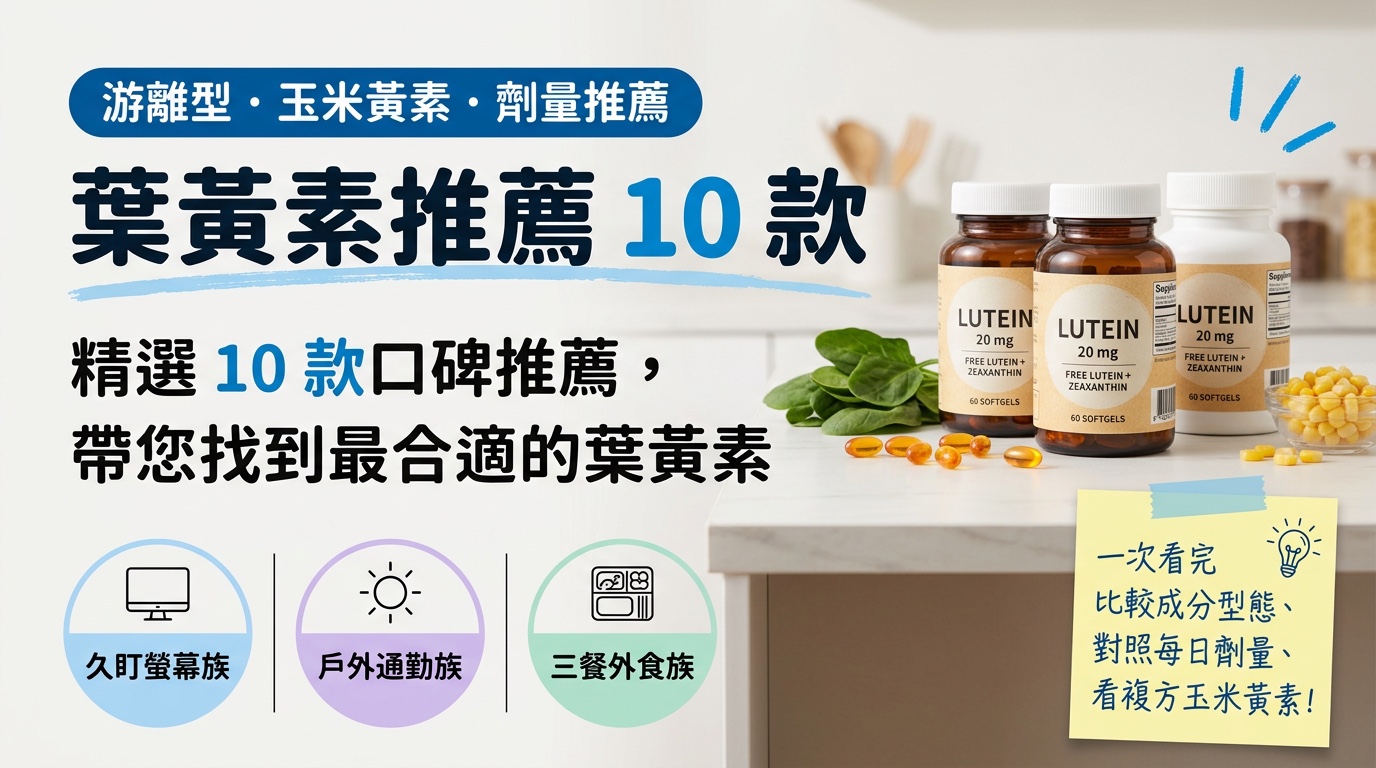
葉黃素推薦 10 款封面:三瓶葉黃素軟膠囊與菠菜、玉米粒

About the Editor

Kang
KangContent Editor

AI workflow developer by day; formerly an Instagram copywriter and marketing copy editor at a jewellery company. Asks AI before ordering anything, then opens five or six tabs to compare line by line, and reads real user reviews on Threads.

Introduction

Lutein can filter the blue light from phones, computer screens and sunlight, has antioxidant effects, and helps maintain visual function; the human body cannot synthesize it and must obtain it from dark green vegetables or supplements. This article compares 10 lutein products by content, zeaxanthin ratio, and daily cost; esterified lutein labels have been uniformly converted to the actual free-form lutein content.

Based on official website prices, daily cost ranges from NT$9.5 for Sundown to NT$185 for EatBLISS — nearly a 20-fold difference. If you prefer drinks, consider EatBLISS Dingjing King; if you prefer a lutein–zeaxanthin compound, consider Daiken Biomedical Vision Ease; if daily cost is your priority, consider Sundown Marigold Extract Softgels.

Best For

Anyone who looks at screens more than eight hours a day

Working on a computer by day and scrolling your phone after work means your eyes spend most of the day on near screens. This habit is suited to taking lutein as daily care. Choose a once-daily capsule with 10–20 mg — that’s sufficient; you don’t need to start with a high 30 mg dose.

Commuters or exercisers who are often outdoors

Spending long periods outdoors exposes your eyes to more sunlight than indoor life; people who commute by bike or regularly run or hike fall into this group. Sunglasses only block immediate glare; lutein needs to be taken long-term to accumulate in the macula, so people who habitually wear sunglasses are still suitable candidates for supplementation.

People who eat out often and have few vegetables

Ready-made meals and buffets usually contain small portions of vegetables, while lutein mainly comes from dark green vegetables like spinach, sweet potato leaves, and Chinese kale, so people who eat out a lot often don’t get enough. The lutein in supplements is the same compound as in vegetables, so you can fill the gap with supplements or add one serving of blanched greens each day.

10 Lutein Recommendations

EatBLISS Dingjing King Marigold Lutein Drink
1

EatBLISS Dingjingwang Marigold Lutein Drink

Editor’s takeMost lutein products on the market are capsules; Dingjingwang is unusually offered as a drink. Each sachet contains 28 mg of lutein plus zeaxanthin and meso‑zeaxanthin, supplying the three macular pigments in one go. For people who have difficulty swallowing pills, drinking it makes daily use easiest. Note that one sachet is already close to the 30 mg daily upper limit, so do not take additional lutein capsules when using this product.
Price
NT$1,480/8 packs, about NT$185 per day
Lutein
28 mg per pack (box labeled as free‑form)
Zeaxanthin
Zeaxanthin 5.6 mg, meso‑zeaxanthin 28 mg
Form
Liquid drink, 50 ml per pack
Daily serving
1 pack
Other ingredients
Cordyceps extract, bilberry extract, aronia extract, vitamins C, E, B12; vegan
Dayan Biotech ShiyiSight Lutein (大研生醫 視易適葉黃素)
2

Daiken Biotech VisioLutein

Editor’s takeDaiken VisioLutein follows research-based formulation design: each capsule contains 10 mg lutein and 2 mg zeaxanthin, the same ratio used in the AREDS2 study. One capsule a day is sufficient for regular use; during periods of heavy screen time you can increase to one capsule morning and evening. The dosage can be adjusted to match need, which single-capsule 30 mg products can’t offer. The downside is that for ingredients like astaxanthin and bilberry, the official site lists the names but not the milligram amounts—ask customer service before ordering if you need the exact contents.
Price
NT$1,980/30 capsules, about NT$66 per day (1 capsule)
Lutein
About 10 mg per capsule (FloraGLO free-form)
Zeaxanthin
About 2 mg per capsule (ZeaONE)
Form
Softgel
Dosage
1 capsule daily; for extra support, 1 capsule morning and evening
Other ingredients
Chilean wineberry, bilberry, astaxanthin, flaxseed oil, vitamin E
Nutritionist Light Meals My View Marigold Lutein
3

Dietician Light Meals My Vision Marigold Lutein

Editor’s takeDietician Light Meals also follows the 10:2 lutein-to-zeaxanthin ratio used in the AREDS2 study. The difference is this formula adds more complementary ingredients: about 90 mg of anthocyanins and 8 mg of astaxanthin daily, and every ingredient lists its milligram amount, which is reassuring if you want precise control over your intake. Note the labeled amounts are based on 2 capsules per day; a box of 60 capsules actually lasts only 30 days, so don’t assume it’s a two-month supply when comparing prices.
Price
NT$1,880/60 capsules, about NT$63 per day (2 capsules)
Lutein
10 mg per 2 capsules (FloraGLO free-form)
Zeaxanthin
2 mg per 2 capsules
Form
Vegetable capsule
Daily dose
2 capsules
Other ingredients
Bilberry extract 160 mg (anthocyanins ≈ 90 mg), Haematococcus pluvialis (astaxanthin 8 mg), black soybean seed coat extract, selenium, zinc
Puritan's Pride free-form lutein 20 mg
4

Puritan’s Pride Free-form Lutein 20 mg

Editor’s takeIf you only want plain lutein without other combined ingredients, Puritan’s Pride is the simplest formulation here: 20 mg per softgel, 120 softgels per box lasts four months, which works out to about NT$12 per day. By contrast, its zeaxanthin is only 0.8 mg, a much lower ratio than Dayan and Funcare; if you want to supplement both lutein and zeaxanthin together, those two brands would be more suitable.
Price
NT$1,459/120 capsules, about NT$12 per day
Lutein
20 mg per capsule (Lutigold free-form)
Zeaxanthin
0.8 mg per capsule
Form
Softgel
Daily dose
1 capsule, after a meal
Other ingredients
No other functional ingredients
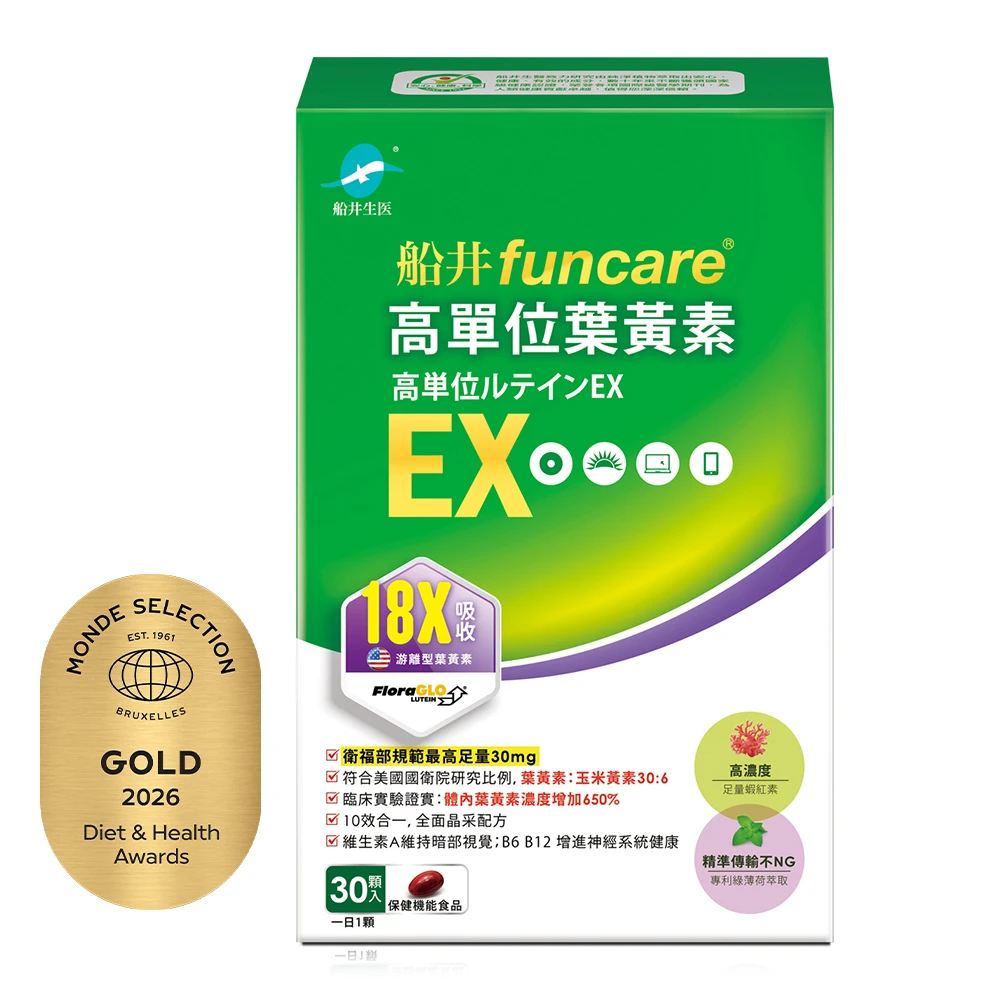
Funcare (船井生醫) High-Potency Lutein EX
5

Funai Biotech funcare High-Dose Lutein EX

Editor’s takeFuncare’s design is one capsule that hits the mark: 30 mg lutein plus 6 mg zeaxanthin, maintaining a 5:1 ratio. One capsule a day reaches the Ministry of Health and Welfare’s limit, so you don’t have to calculate counts yourself. Precisely because one capsule reaches the limit, stop taking other lutein-containing products while using this; if you take combination supplements, check their ingredient lists.
Price
NT$1,580/30 capsules, about NT$53 per day
Lutein
30 mg per capsule (FloraGLO free-form)
Zeaxanthin
6 mg per capsule
Form
Softgel
How to take
1 capsule daily, after meals
Other ingredients
Fish oil, Haematococcus pluvialis extract (astaxanthin), bilberry, goji extract, vitamins A, E, B6, B12
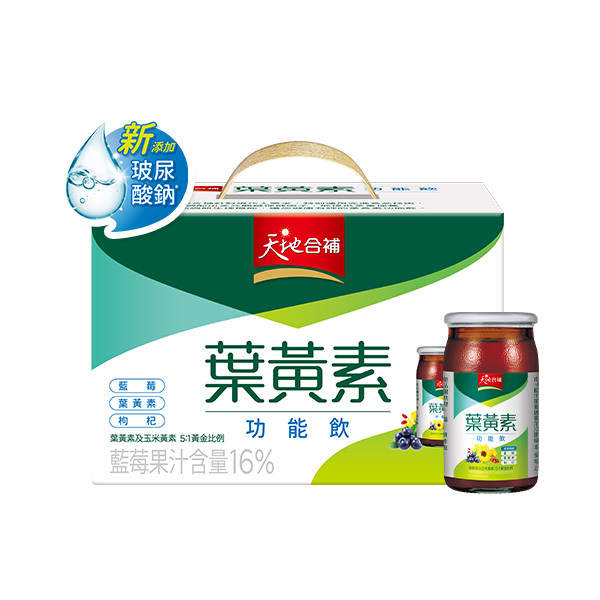
Tiandi Hebu (天地合補) Lutein Functional Drink
6

Tian Di He Bu Lutein Functional Drink

Editor’s takeLike the previous drink, this is taken as a beverage. Tian Di He Bu is packaged in 60 mL small bottles, each serving contains 8 mg of lutein — a relatively gentle dose, suitable for those who dislike swallowing capsules or want to start with a lower dose. However, the official site doesn’t state how many bottles to drink per day, and the ingredient list includes blueberry juice, so if you care about sugar content check the nutrition label before ordering.
Price
NT$1,099/18 bottles, about NT$61 per bottle
Lutein
8 mg per serving (free-form)
Zeaxanthin
5:1 ratio with lutein; milligram amount not listed on the official website
Form
Drink, 60 mL per bottle
Daily
Not stated on the official website
Other ingredients
Goji extract, black soybean, blueberry juice, vitamin A, Streptococcus ferment (contains sodium hyaluronate); vegan
Youhuo Yuanli Marigold Extract Lutein + Astaxanthin (悠活原力 金盞花萃取葉黃素+蝦紅素)
7

Yoho Power Marigold Extract Lutein + Astaxanthin

Editor’s takeYoho Power puts 30 mg of lutein and 2 mg of astaxanthin into a single capsule, and the official site clearly states not to take more than one per day, so the dosage is easy to manage. The amount of zeaxanthin is relatively low — the label only lists “marigold extract (contains 5% zeaxanthin) 10 mg,” which converts to about 0.5 mg, much lower than Dayan and Funai, so people who care about the zeaxanthin proportion should take note.
Price
NT$1,380/30 capsules, about NT$46 per day
Lutein
30 mg per capsule (FloraGLO free-form)
Zeaxanthin
Marigold extract (contains 5% zeaxanthin) 10 mg
Form
Softgel
Daily dose
1 capsule, do not exceed 1 per day
Other ingredients
Astaxanthin 2 mg, DHA algal oil, rooster comb extract (contains sodium hyaluronate), N-acetyl glucosamine, vitamins A, B1, B2, E, zinc, selenium, copper
Brand's Crystal Advanced All-Round Lutein Tablets EX
8

Brand’s Jingyan Comprehensive Lutein Tablets EX

Editor’s takeThe formula of Brand’s Jingyan places less emphasis on lutein — only 5 mg per day, the lowest dose in this article. The formula focuses on blackcurrant and astaxanthin. So it’s better suited for people who already eat plenty of dark green vegetables and want to add more of those two ingredients; if you want to follow the AREDS2 study and reach 10 mg per day, this product does not provide enough.
Price
NT$1,980/60 tablets, about NT$66 per day (2 tablets)
Lutein
5 mg per 2 tablets (FloraGLO free-form)
Zeaxanthin
Marigold extract (contains zeaxanthin) 20 mg, zeaxanthin content not specified
Form
Tablet
Daily dose
2 tablets, take with water after meals
Other ingredients
Blackcurrant extract (contains anthocyanins) 114.4 mg, red algae extract (contains astaxanthin) 105 mg, Vitamin A
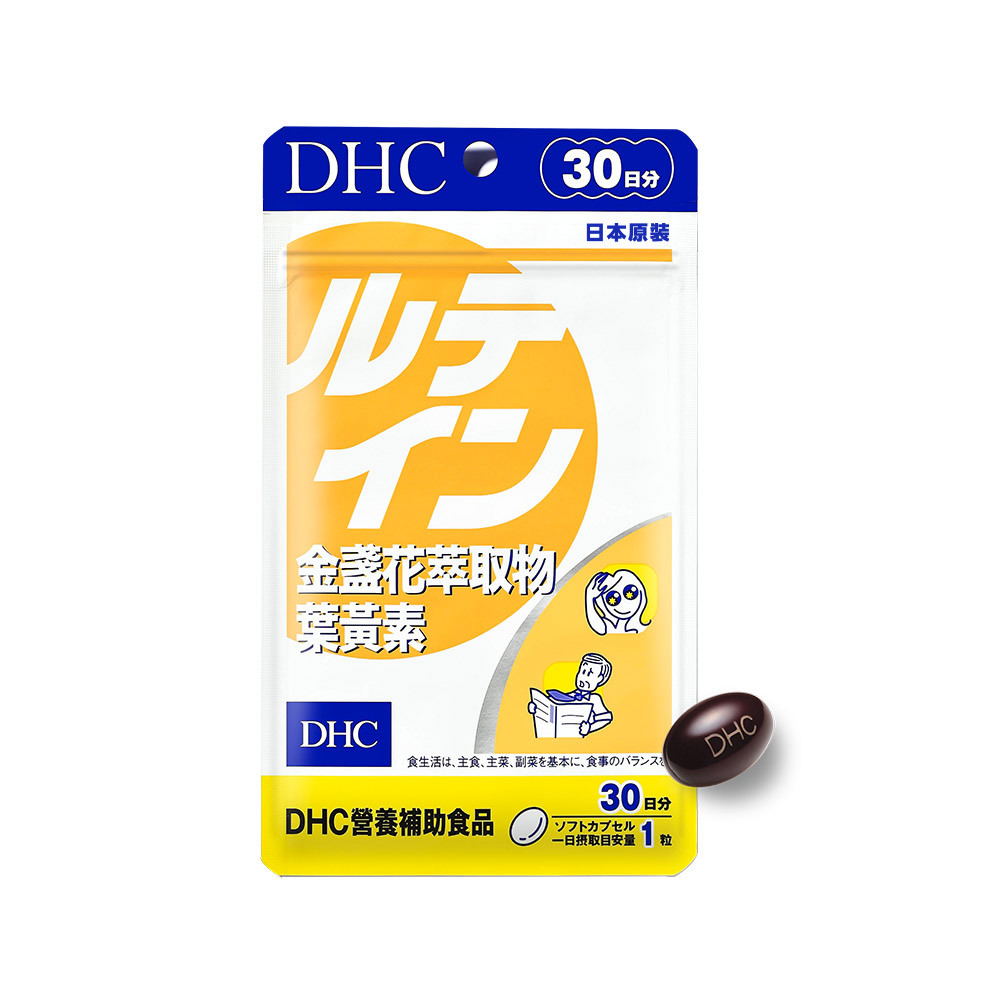
DHC Marigold Extract Lutein
9

DHC Marigold Extract Lutein

Editor’s takeIf it’s your first time taking lutein and you’re not sure you’ll keep it up, DHC is the least burdensome option: NT$490 a month for 16 mg lutein per day. The downside is there is no zeaxanthin on the ingredient list; if you want both, you’ll need to take an additional supplement or choose a combined formula instead.
Price
NT$490/30 capsules, about NT$16 per day
Lutein
16 mg per capsule (marigold extract 80 mg, lutein 20%)
Zeaxanthin
Not listed in ingredients
Form
Softgel
Daily
1 capsule
Other ingredients
Blackcurrant extract powder (anthocyanins 35%) 20 mg, vitamin E 13.5 mg
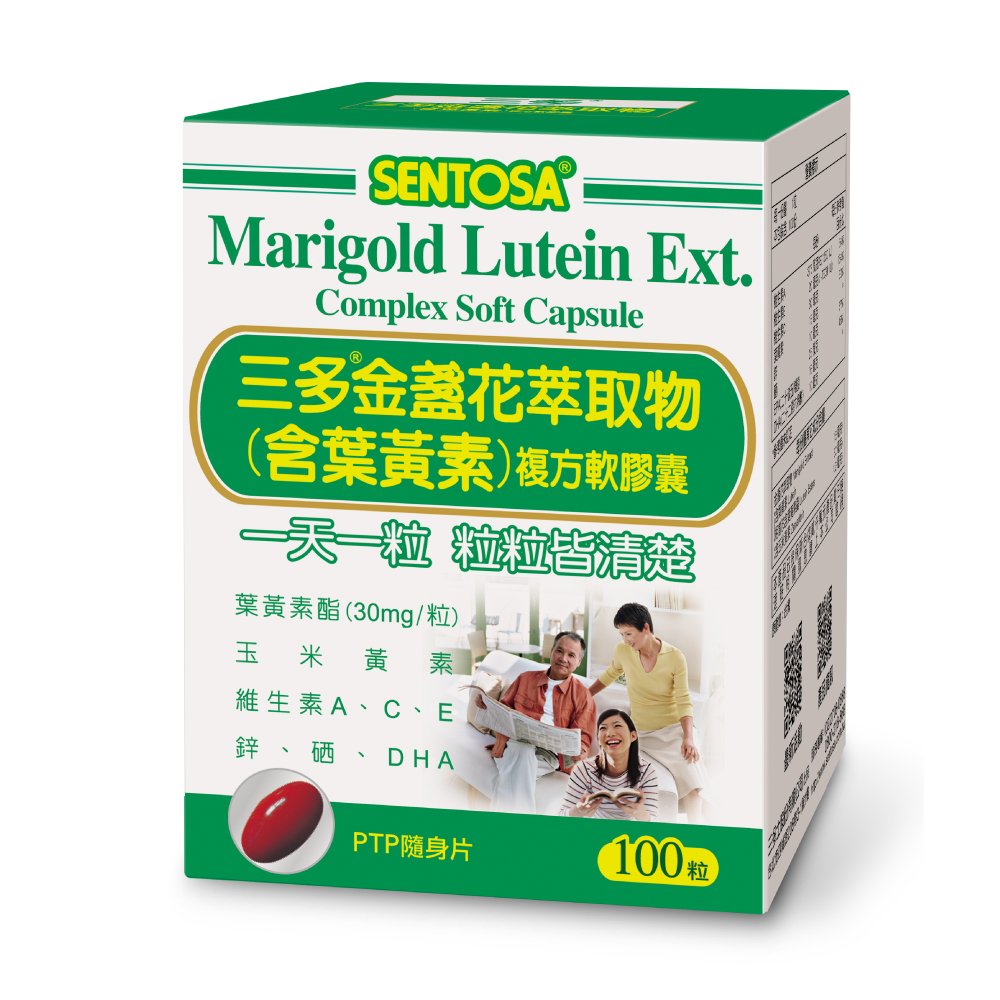
Sanduo Marigold Extract (San Duo marigold extract complex softgels (contains lutein))
10

Sentosa Marigold Extract (with Lutein) Complex Soft Capsules

Editor’s takeSentosa comes in a box of 100 capsules; at the listed price it costs under NT$10 per day, the lowest daily expense. When comparing prices, note the bottle lists 30 mg as lutein ester; the official site also converts this and the actual lutein is only 15 mg, so compare using 15 mg to be accurate.
Price
NT$950/100 capsules, about NT$9.5 per day
Lutein
30 mg lutein ester per capsule, contains 15 mg lutein (esterified)
Zeaxanthin
1.2 mg per capsule
Form
Soft capsule
Daily dose
1 capsule
Other ingredients
Fish oil (EPA 16 mg, DHA 10 mg), vitamins A, C, E, zinc, selenium
BrandProduct namePriceLutein contentDaily doseOther main ingredients
YibixiDingjing King Marigold Lutein Drink (8 packs)NT$1,48028 mg (free-form) / pack1 pack per dayZeaxanthin 5.6 mg, meso-zeaxanthin, Cordyceps militaris, bilberry
Dayan BiomedicalVision Ease Lutein (30 capsules)NT$1,980About 10 mg (free-form) / capsule1–2 capsules per dayZeaxanthin about 2 mg, maqui berry, bilberry, astaxanthin
Nutritionist LiteMy Perspective Marigold Lutein (60 capsules)NT$1,88010 mg (free-form) / 2 capsules2 capsules per dayZeaxanthin 2 mg, bilberry, astaxanthin, black soybean seed coat
PrudenFree-form Lutein 20 mg (120 capsules)NT$1,45920 mg (free-form) / capsule1 capsule per dayZeaxanthin 0.8 mg
Chuanjing BiomedicalHigh-Dose Lutein EX (30 capsules)NT$1,58030 mg (free-form) / capsule1 capsule per dayZeaxanthin 6 mg, fish oil, astaxanthin, vitamin A
Tiandi HebuLutein Functional Drink (60ml×18 bottles)NT$1,0998 mg (free-form) / servingNot specified on official siteZeaxanthin (ratio 5:1), goji, blueberry juice
U-Heart Original PowerMarigold Extract Lutein + Astaxanthin (30 capsules)NT$1,38030 mg (free-form) / capsule1 capsule per dayAstaxanthin 2 mg, DHA algal oil, vitamin A
Brand’sCrystal Research All-Round Lutein Tablet EX (60 tablets)NT$1,9805 mg (free-form) / 2 tablets2 tablets per dayBlackcurrant extract, red algae extract (contains astaxanthin)
DHCMarigold Extract Lutein (30 capsules)NT$49016 mg (free-form) / capsule1 capsule per dayBlackcurrant extract, vitamin E
SentosaMarigold Extract (with Lutein) Complex Soft Capsules (100 capsules)NT$95030 mg lutein ester, contains 15 mg lutein / capsule1 capsule per dayZeaxanthin 1.2 mg, fish oil, vitamins A, C, E, zinc

Choosing Lutein: form, dose and formula matter

3 Key Selection Points Form Convert to free form Dose Compare to daily limit Formula Proportion of zeaxanthin First convert to the same unit, then see how much you get per day S paceA

Convert free form and esterified lutein to the same basis

There are two labeling conventions for lutein. For free-form lutein the label number is the actual lutein amount; esterified lutein has two fatty acids attached and the labeled weight includes those fatty acids. For the most common lutein dipalmitate, the molecular weight is 1045.7 and the lutein portion is 568.9, so esterified lutein labels should be multiplied by about 0.54 to get the actual lutein you consume.

Santuo’s marigold extract softgel is an example—the official site states each capsule “contains 15 mg lutein, equivalent to 30 mg lutein esters.” Enter the milligram amount and form from the bottle into the converter below to calculate the actual daily lutein intake.

Lutein Content Calculator

How many mg per capsule (serving) does the label say?
mg
Form on the label
How many per day?

Converted to free-form lutein, you get about 10.8 mg a day. That is within Taiwan’s 30 mg daily limit.

The 10 products in this article, on the same basis

ProductLabelPer dayAs free-form lutein
Funai Biotech30 mg / capsuleFree form1 capsule30 mg
Yoho Power30 mg / softgelFree form1 softgel30 mg
EatBLISS28 mg / sachetFree form1 sachet28 mg
Puritan's Pride20 mg / capsuleFree form1 capsule20 mg
DHC16 mg / softgelFree form1 softgel16 mg
Sentosa30 mg / softgelEster form; 15 mg lutein per the official site1 softgel15 mg
Daiken Biotech10 mg / softgelFree form1 softgel10 mg
Dietician Light Meals5 mg / capsuleFree form2 capsules10 mg
Brand's2.5 mg / tabletFree form2 tablets5 mg
Tian Di He Bu8 mg / bottleFree formNot statedNot stated

Ester-form figures are multiplied by 0.54 to get free-form lutein, based on the molecular weight ratio of lutein to lutein dipalmitate (568.9 ÷ 1045.7); where the official site gives its own conversion, that figure is used. Daily amounts follow each official site; products without a stated daily amount are not converted.

Compare daily dose to the Ministry of Health and Welfare limit

The Ministry of Health and Welfare announced in July 2024 that products made from marigold or tagetes extracts must not exceed 30 mg of total lutein per day; this applies to capsules and beverages (Restrictions on the use of marigold and tagetes as food raw materials). If lutein is added as a food additive (for example in drinks or jellies), the daily limit is 9 mg (Scope and limits of food additive use).

Youhuo Yuanli and Chuanjing Shengyi provide 30 mg per capsule per day; taking two different lutein products at the same time, or combining a lutein supplement with a multivitamin that contains lutein, can easily exceed the limit.

Check the formula for the zeaxanthin proportion

The macular pigment in the retina is made up of lutein and zeaxanthin. The U.S. National Eye Institute’s AREDS2 study used 10 mg lutein plus 2 mg zeaxanthin per day; commercial products commonly follow this 5:1 ratio.

Dayan Shengyi, Yingyangshi Qingshi, Chuanjing Shengyi and Yibixi all use a 5:1 lutein-to-zeaxanthin ratio; Puruiden provides 20 mg lutein but only 0.8 mg zeaxanthin per capsule; DHC’s ingredient list does not include zeaxanthin. If you want to supplement both, check whether the label lists the milligrams of zeaxanthin separately—if it only states “marigold extract (contains zeaxanthin)” you can’t tell how much is actually present.

Ingredients, common mistakes and who it’s best for — all at a glance

Ingredients, common mistakes and who it’s best for — all at a glance Ingredient comparison Big differences in dose and form Best for Target groups and recommendations Common mistakes Labeling errors and misunderstandings First convert to free form, then compare dose, formula and daily cost S paceA
  • Ingredient comparison: The actual daily lutein across 10 products ranges from Brand’s at 5 mg to Youhuo Yuanli and Chuanjing Shengyi at 30 mg—a sixfold difference. Yibixi, Dayan Shengyi, Yingyangshi Qingshi and Chuanjing Shengyi use a 5:1 lutein-to-zeaxanthin ratio; Puruiden and DHC are almost single-ingredient lutein products; Yingyangshi Qingshi, Brand’s and Youhuo Yuanli additionally include anthocyanins or astaxanthin.
  • Best for: Puruiden, DHC and Santuo are single-ingredient or near single-ingredient lutein products costing NT$9.5–16 per day; Dayan Shengyi and Yingyangshi Qingshi follow the research-backed 10:2 lutein-to-zeaxanthin ratio; Yibixi and Tiandi Hebu are made as beverages, so there’s no need to swallow capsules.
  • Common mistakes: Comparing milligram numbers on packaging directly without checking whether the product is esterified or free-form, or whether the label refers to “per capsule” or “per 2 capsules.” Santuo’s labeled 30 mg converts to 15 mg actual lutein, and Yingyangshi Qingshi’s 10 mg requires taking 2 capsules to reach that amount; failing to convert leads to incorrect comparisons. Another frequent error is taking two lutein-containing products at once and exceeding the 30 mg daily limit.

FAQ

How much lutein should I take per day?

For maintenance, 10 to 20 mg per day is typical; the upper limit is 30 mg. The U.S. AREDS2 study used 10 mg lutein plus 2 mg zeaxanthin per day, and many products are formulated to that amount. For esterified products, convert the label amount to the free-form equivalent first to know how much lutein you actually get per day.

Is free-form lutein better than esterified lutein?

Current research has no consistent conclusion about absorption differences between the two forms. What affects comparisons is labeling: the weight listed for esterified lutein includes fatty acids, so multiply by about 0.54 to get the actual lutein amount. Convert to the same unit first and then compare prices — that’s more practical than debating which form is superior.

Should lutein be taken before or after a meal?

After a meal. Lutein is fat-soluble and is better absorbed when taken with a meal containing fat. The official sites of Puredon and Chuan-Wei Biomed also state it should be taken after meals. If you eat very little at breakfast, take it after lunch or dinner instead.

How long before lutein makes a noticeable difference?

Lutein accumulates slowly in the macula; studies typically observe macular pigment changes over several months, so continued intake is needed to see a difference. For immediate eye fatigue, resting and increasing screen distance are more direct remedies; lutein is for long-term maintenance.

Can lutein be taken together with fish oil?

Yes. Both are fat-soluble, so taking them together with a meal is appropriate. Note that some lutein combination products already contain fish oil, such as formulations from Chuan-Wei Biomed and San Duo; if you also take fish oil separately, add the EPA and DHA amounts from both sources to see the total intake per day.

Conclusion

Lutein is a fat-soluble nutrient and is better absorbed when taken with meals; if you also take multivitamins or other supplements that contain lutein, add the amounts together and keep the daily total below the Ministry of Health and Welfare’s upper limit of 30 mg. Eating more dark green vegetables like spinach and sweet potato leaves can also provide lutein from your diet. If you want to compare products further, you can visit EatBliss, Daiken Biotech, and San Duo’s official sites to compare ingredient labels and recommended daily amounts before deciding.

References

[1] Restrictions on the use of marigold and calendula as food raw materials (Ministry of Health and Welfare, TFDA, announced 113.07.11)
[2] Standards for the scope, limits, and specifications of food additive use: Lutein (Ministry of Health and Welfare, TFDA)
[3] Age-Related Eye Disease Studies (AREDS/AREDS2, U.S. National Eye Institute)
[4] Lutein — Government Gazette Information Network
[5] TQF Functional Food Quality Verification: Lutein Food Quality Specification Standards
[6] Survey on compliance of labeled lutein content in commercial capsule and tablet foods
[7] Lutein — National Taiwan University Hospital Pharmacy Department
[8] A study on eye disease prevention and lutein intake behavior
[9] Study on the efficacy of lutein and zeaxanthin for vision health
Kang
Kang

We compile public discussion and reviews, cross-check them, and cite the source and update date of every claim. Spotted an error? Please contact us.